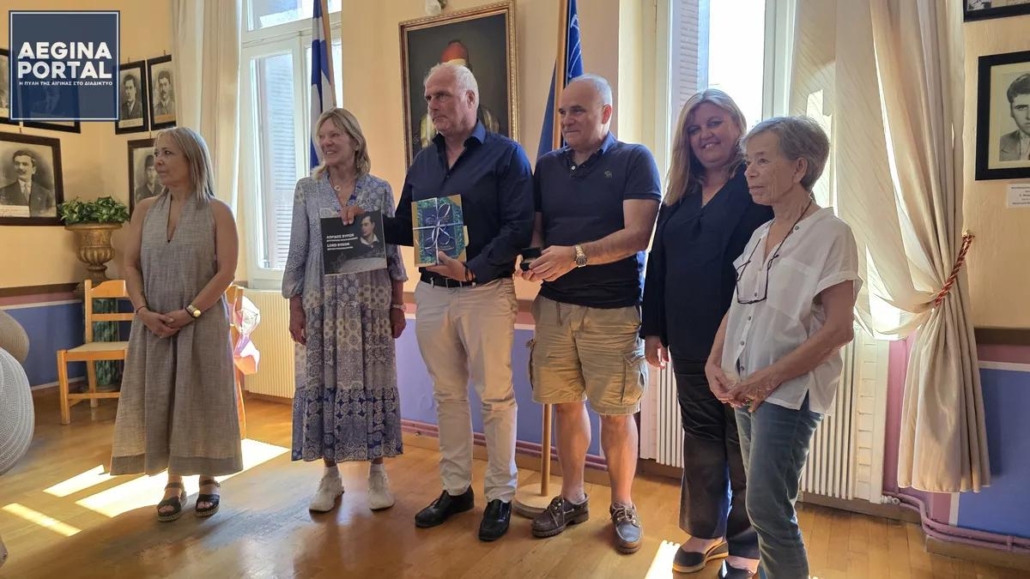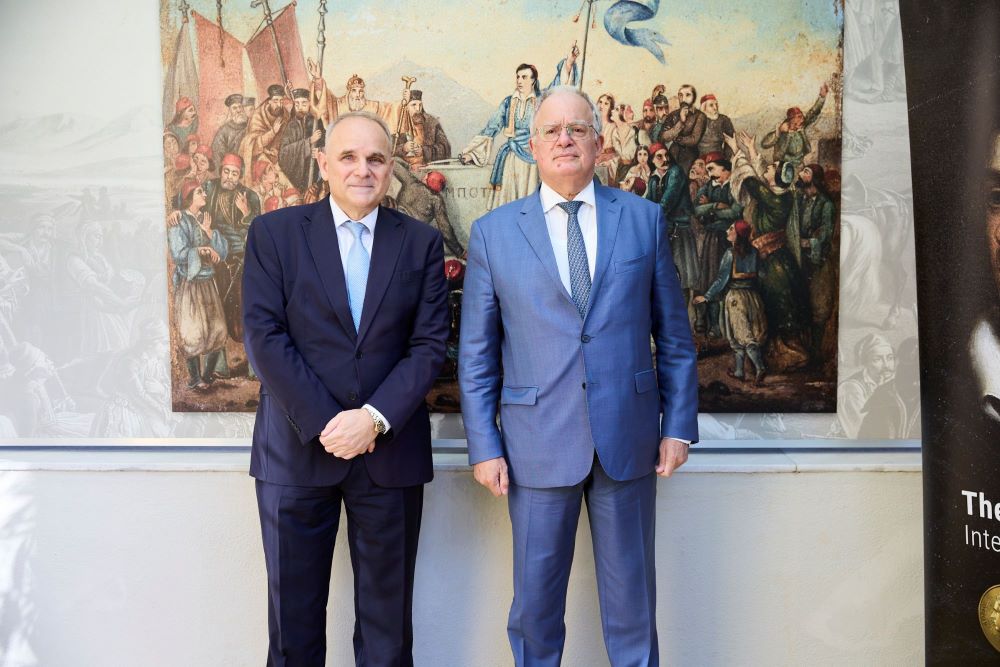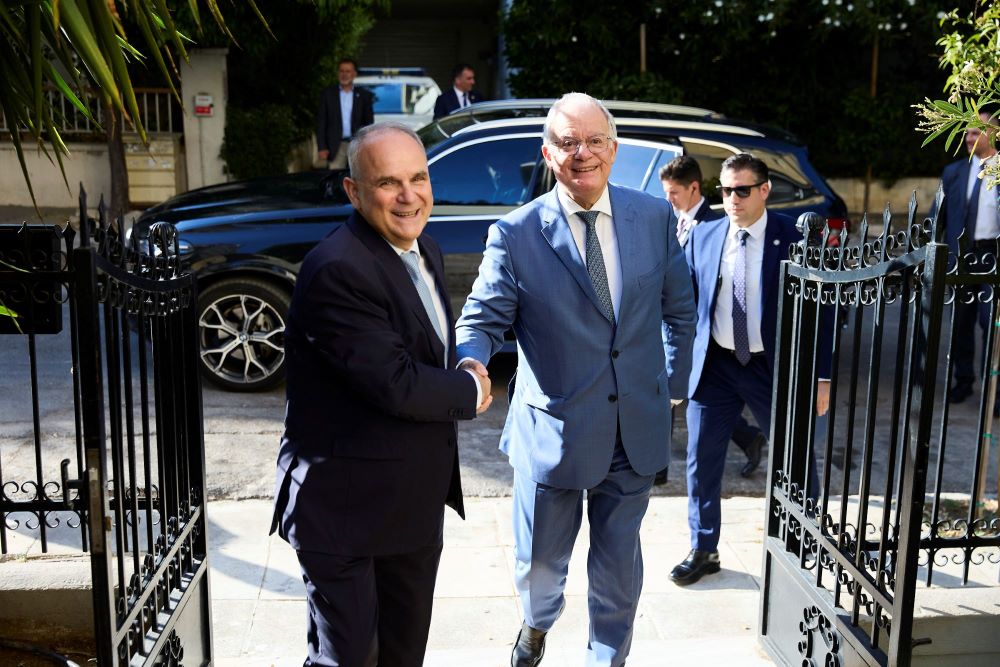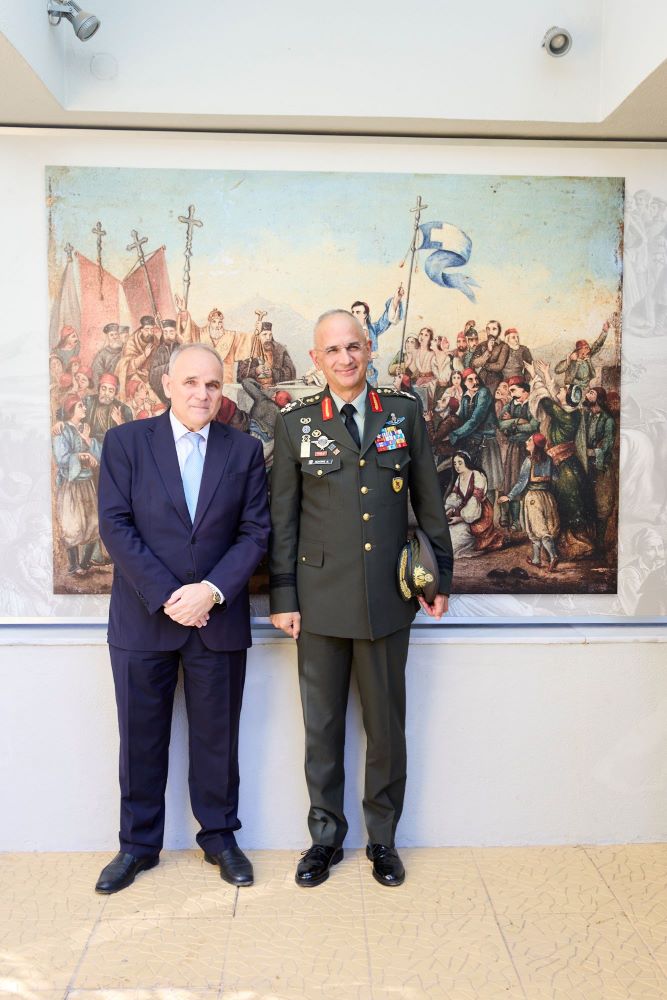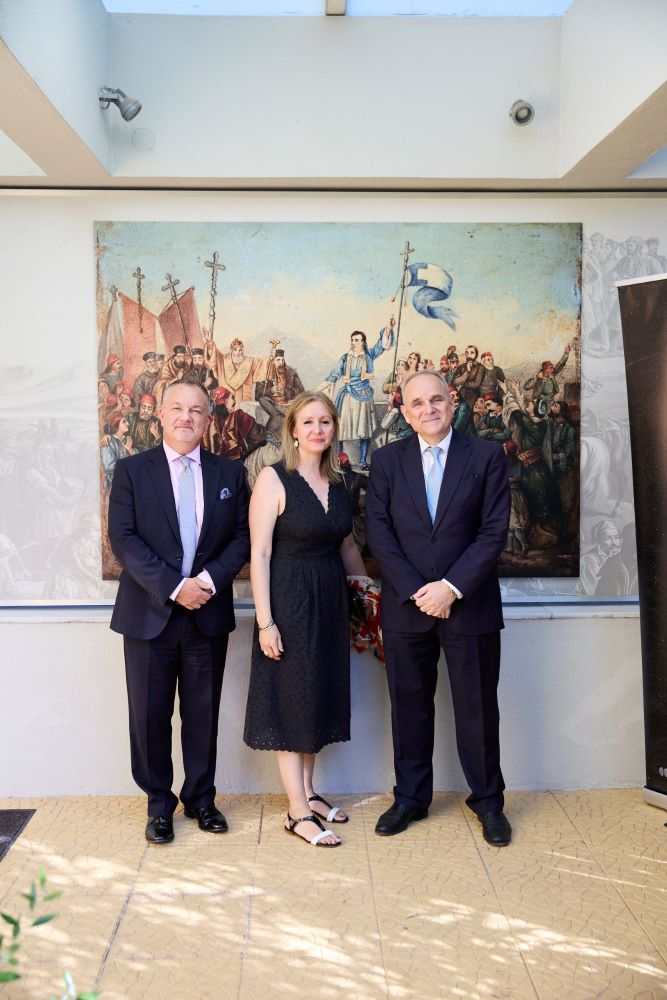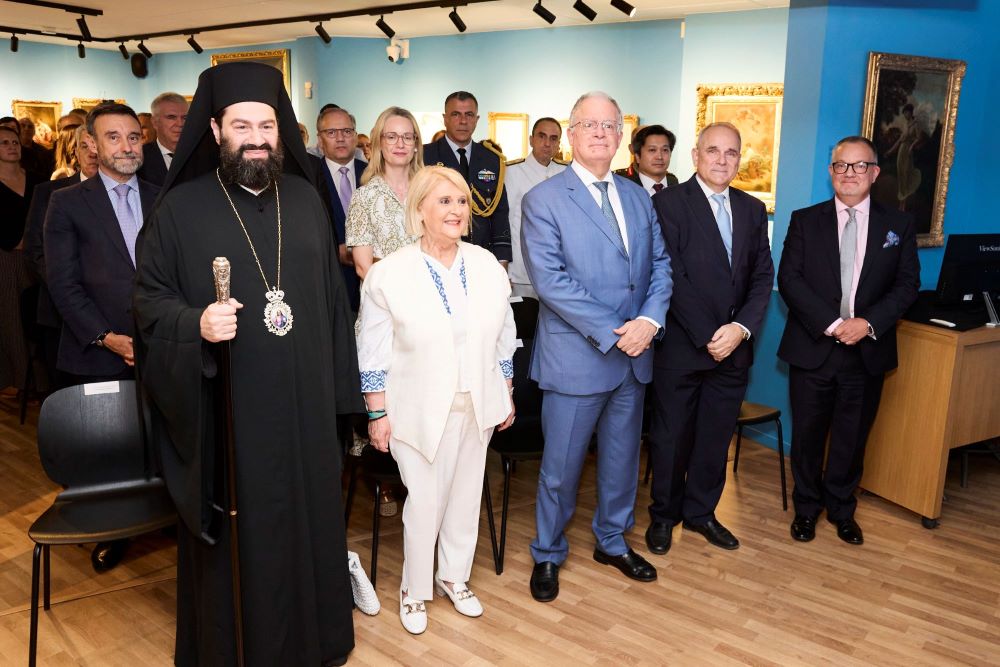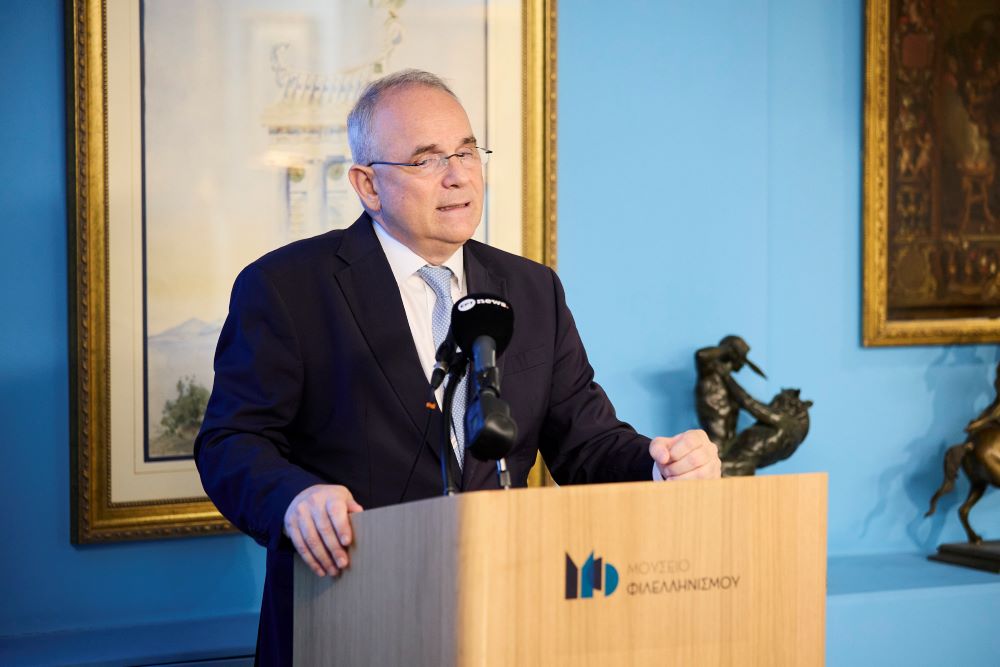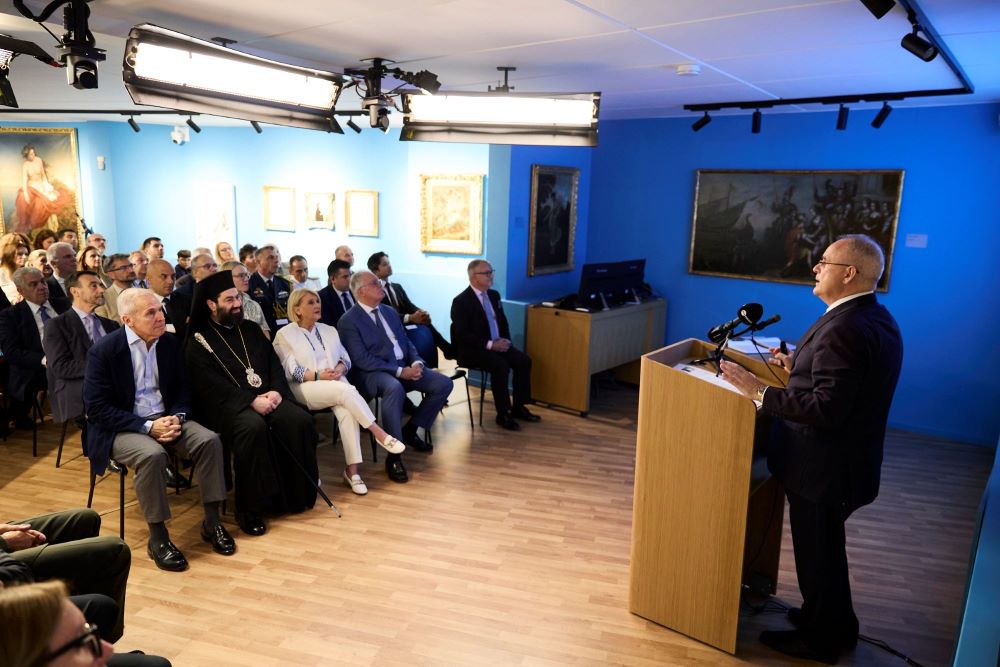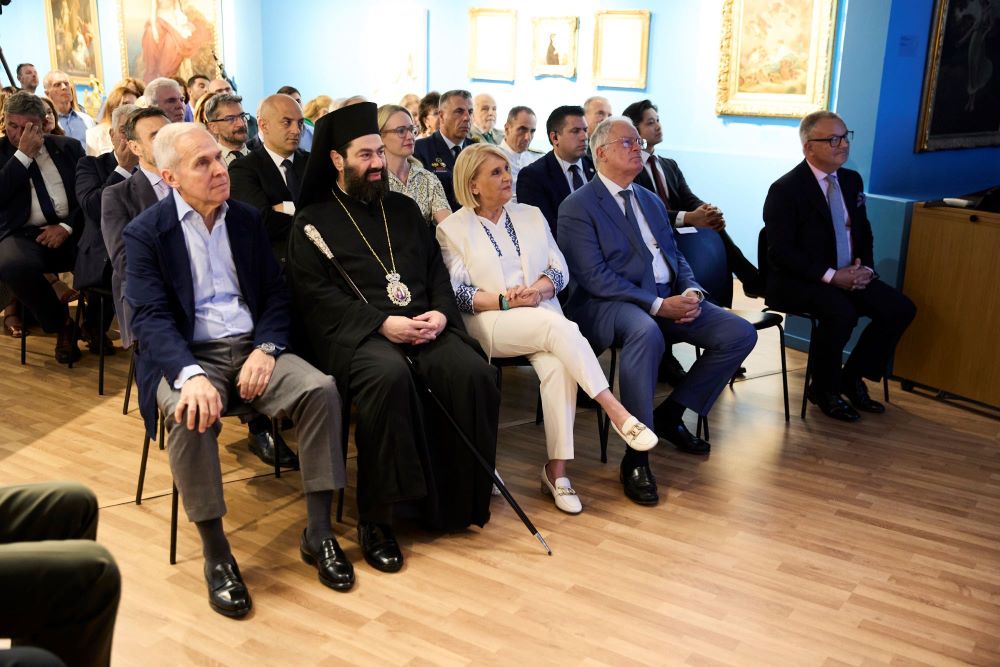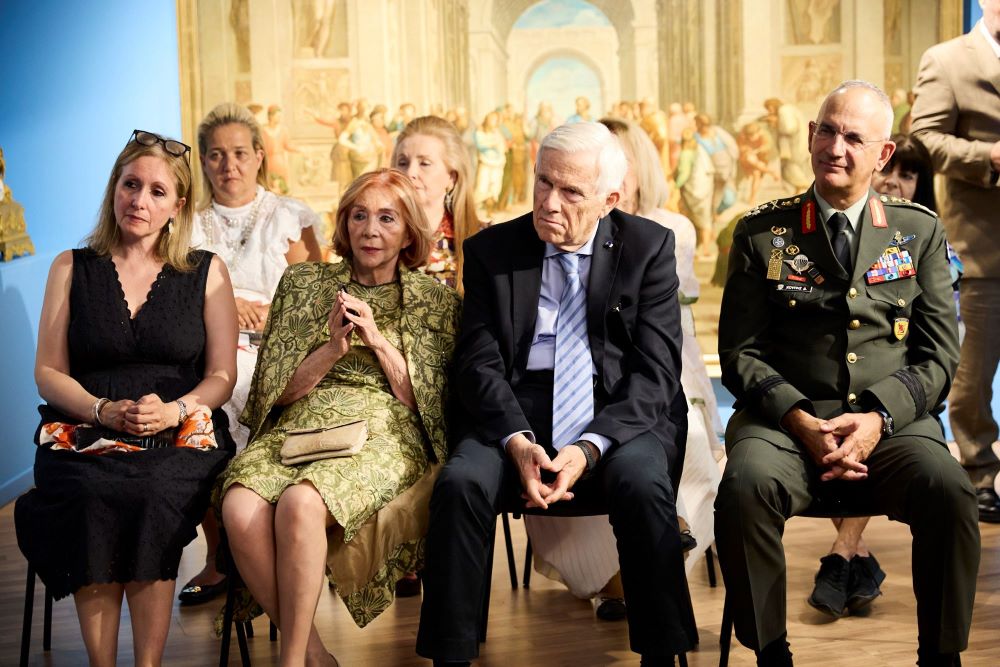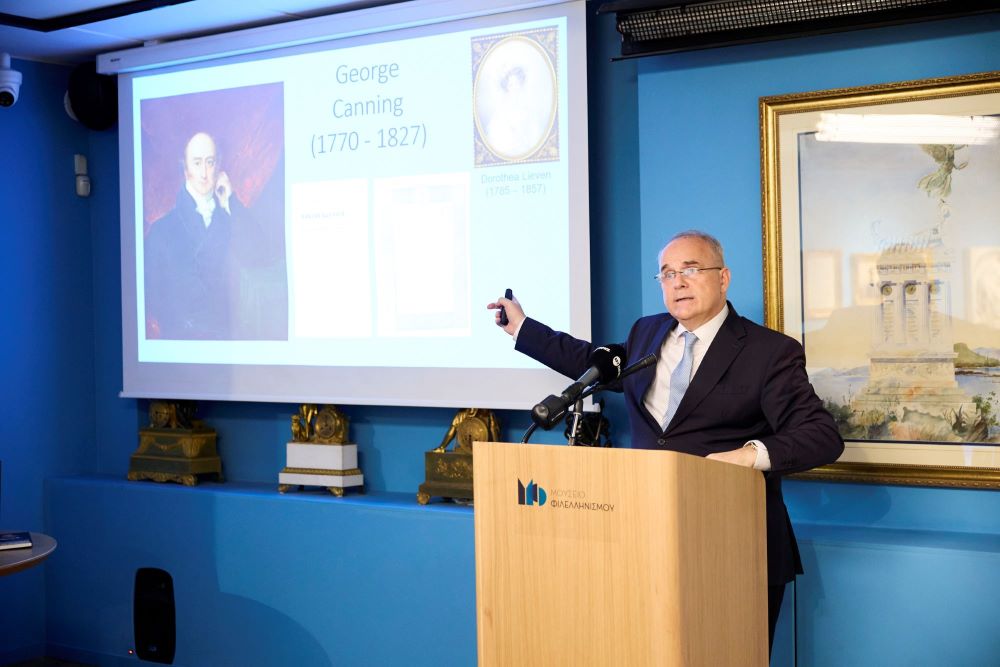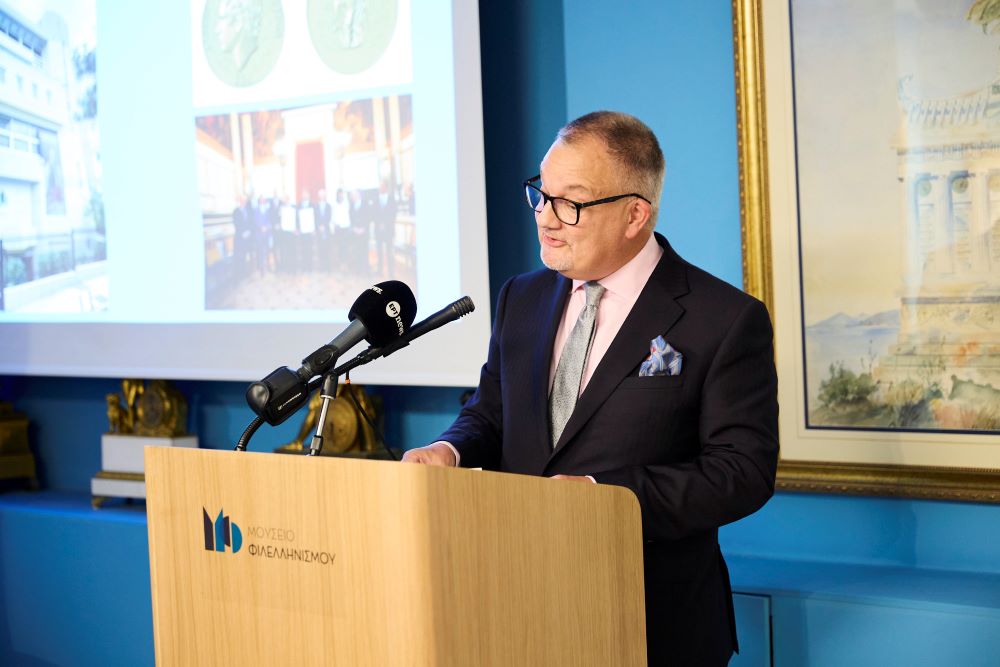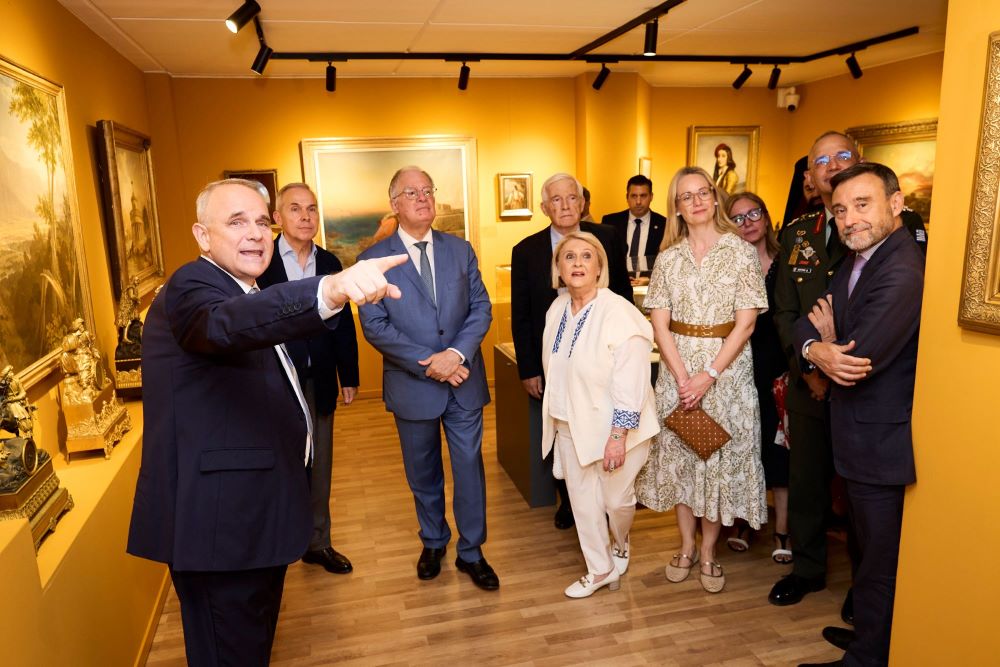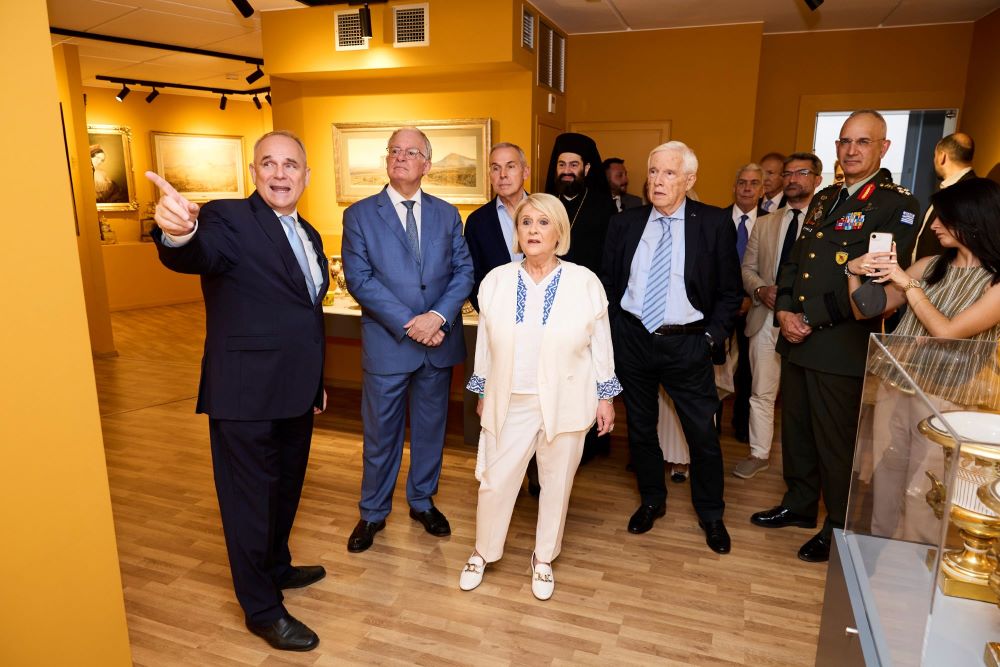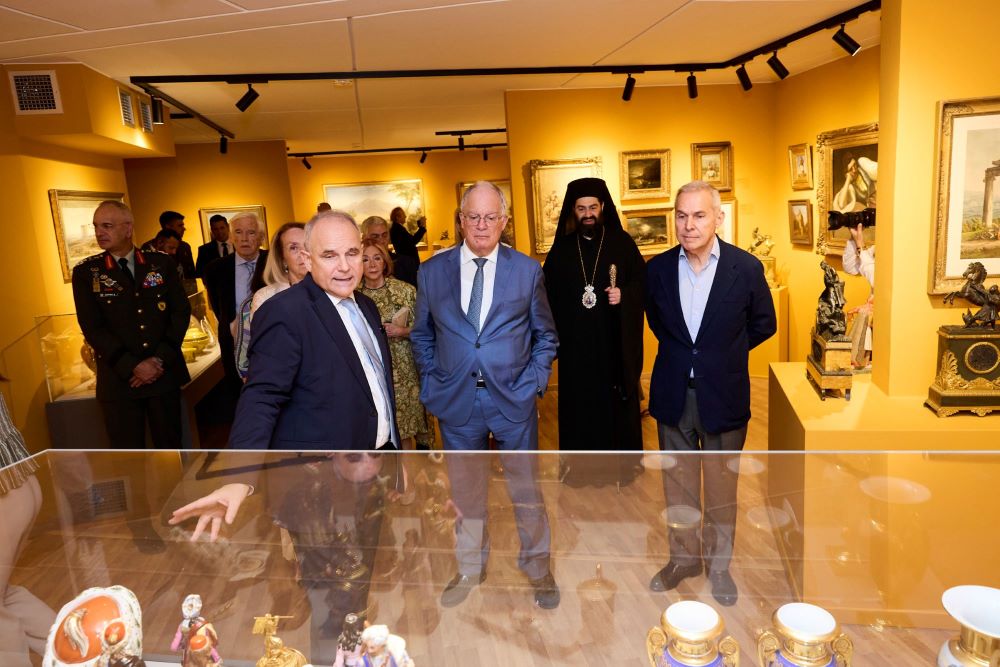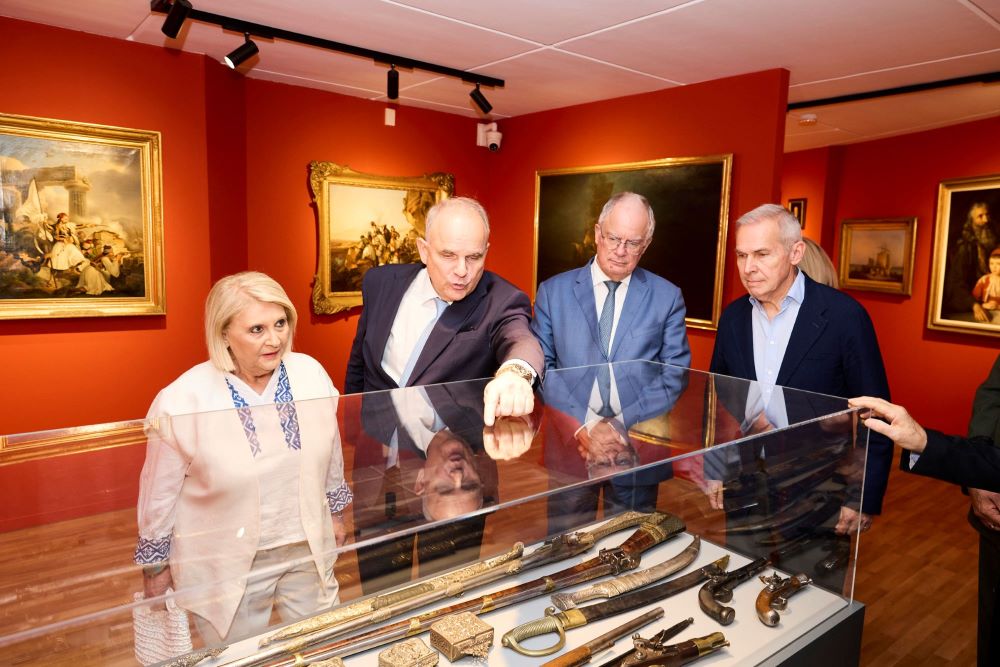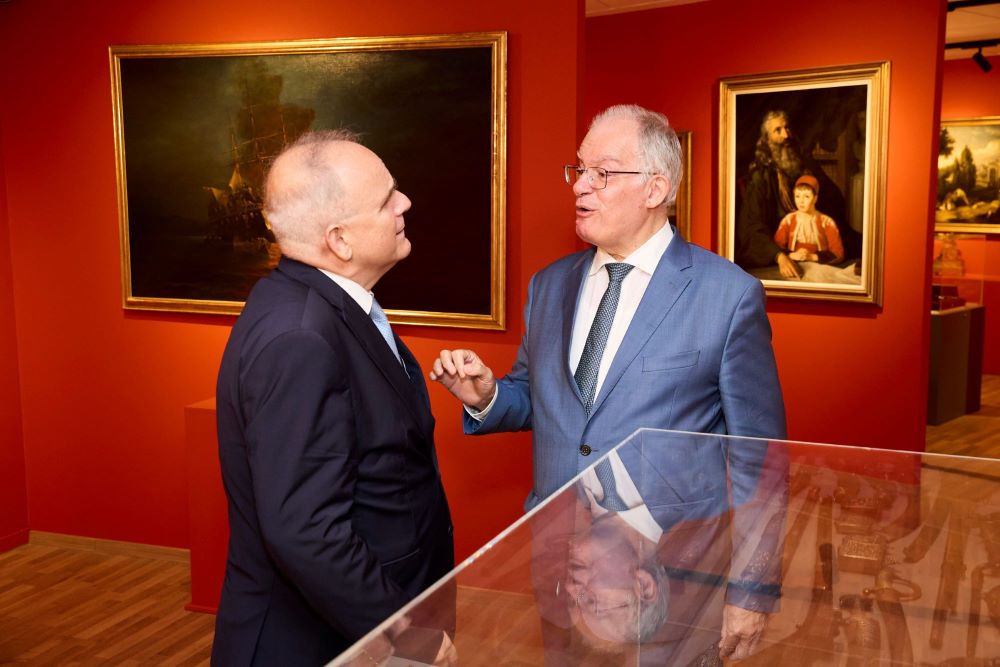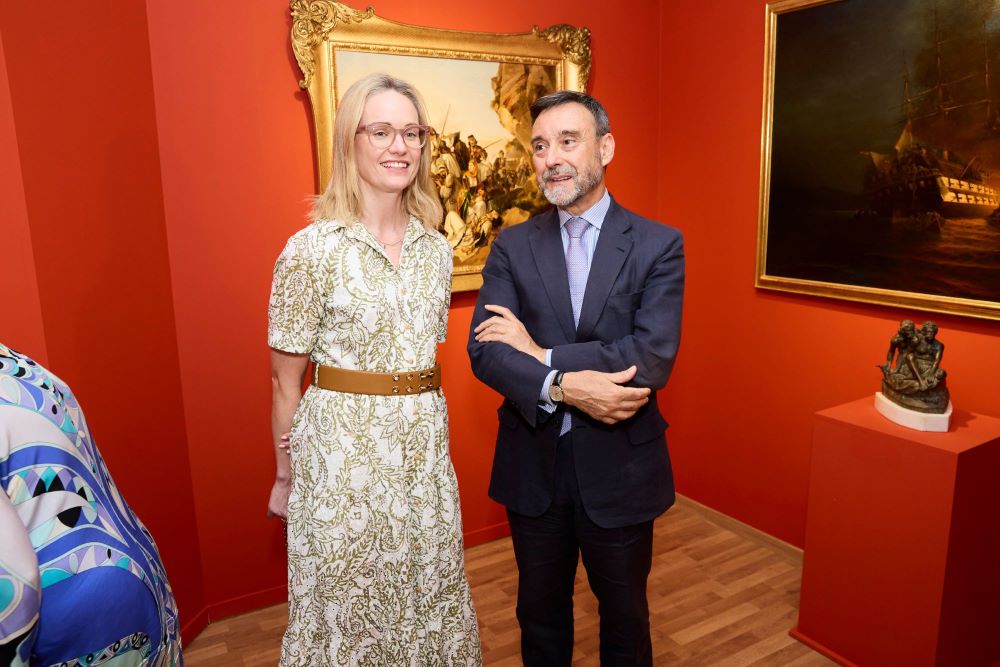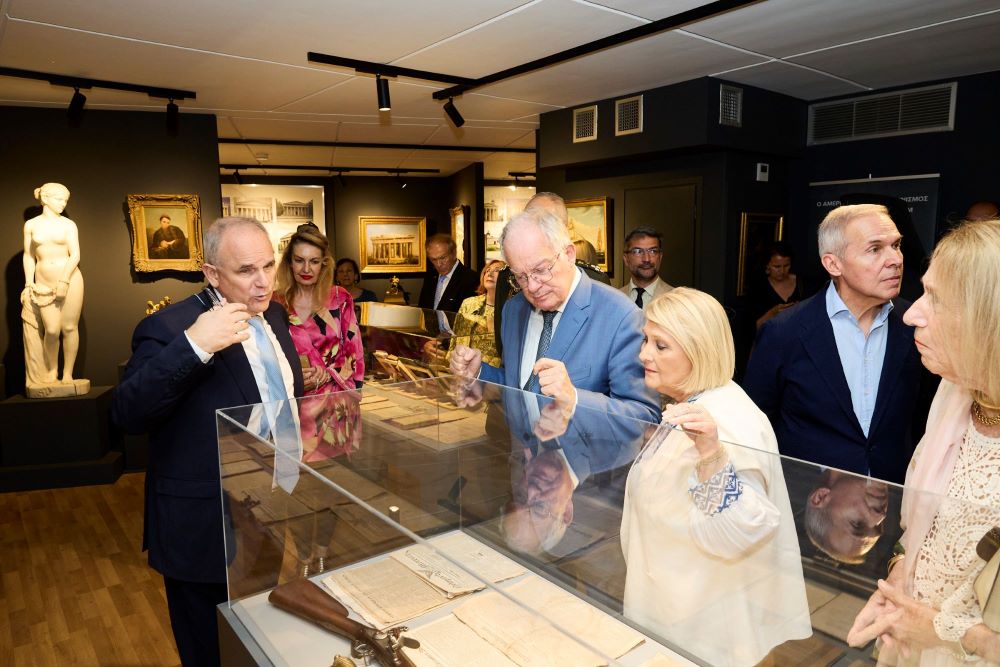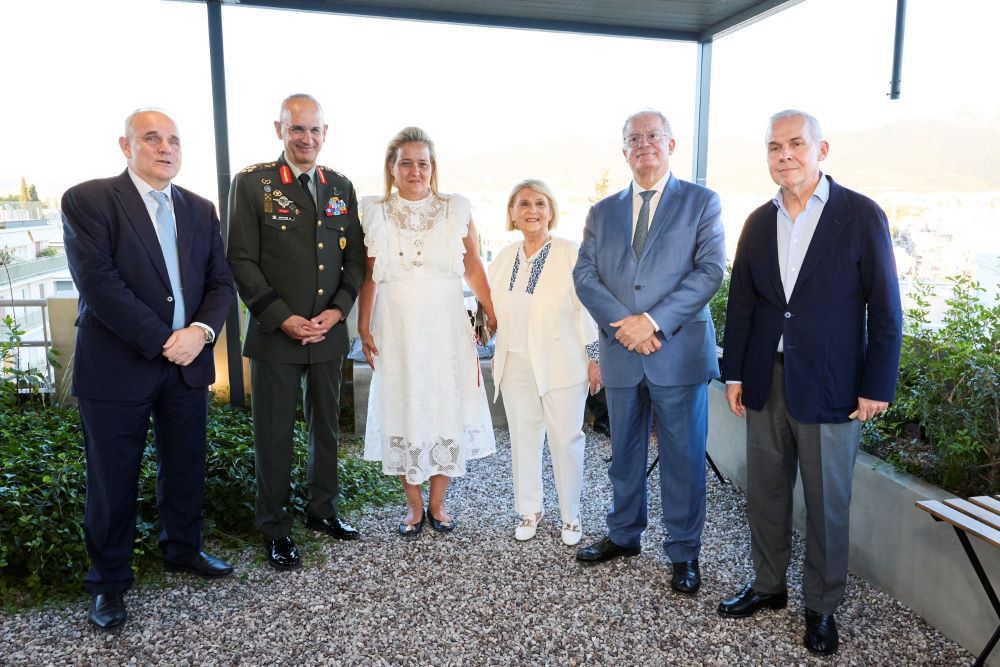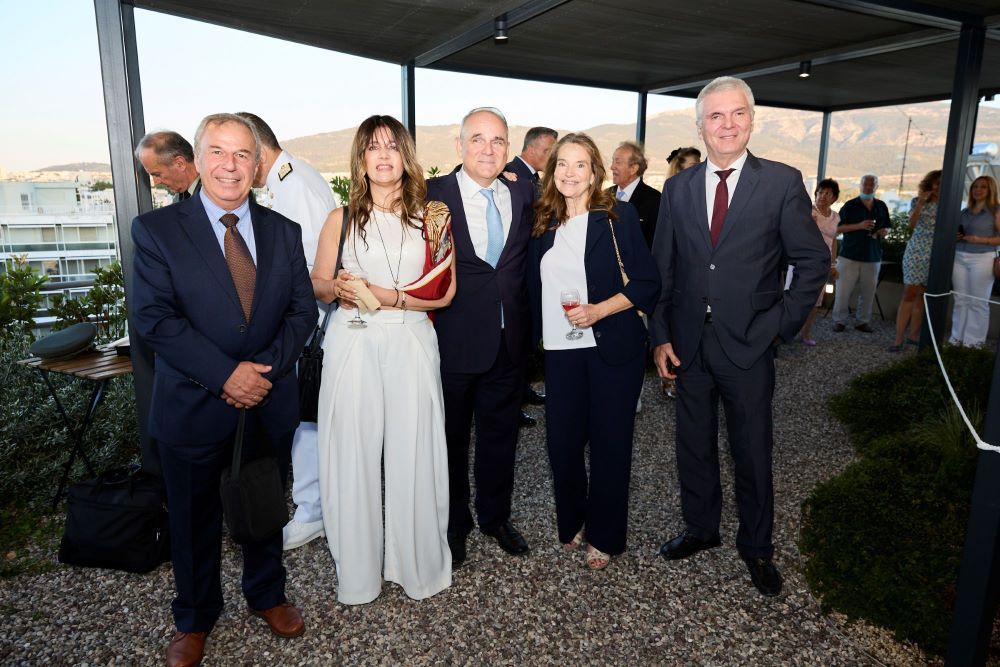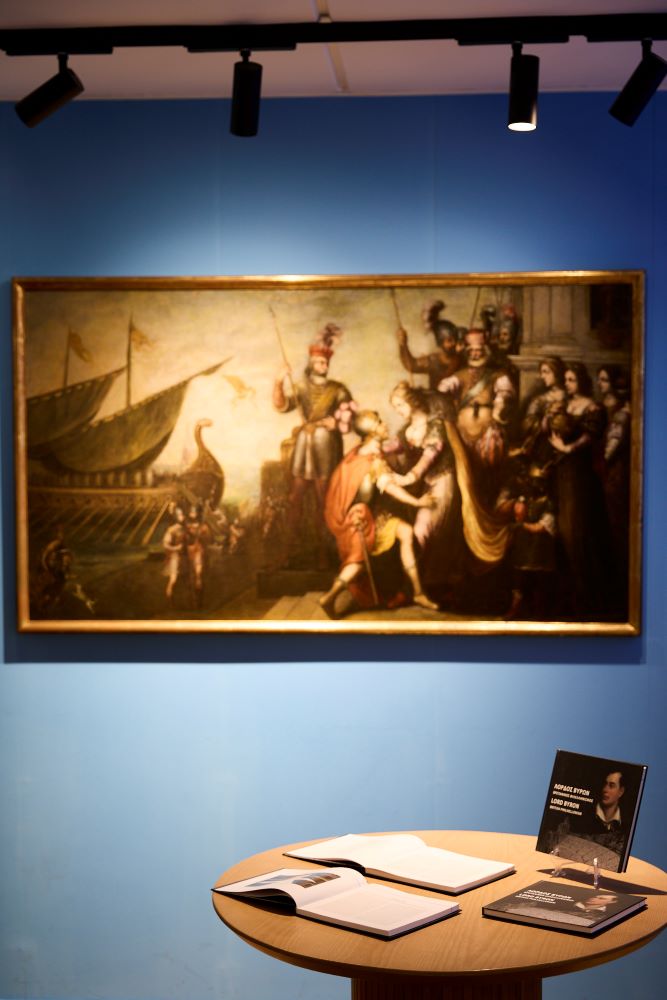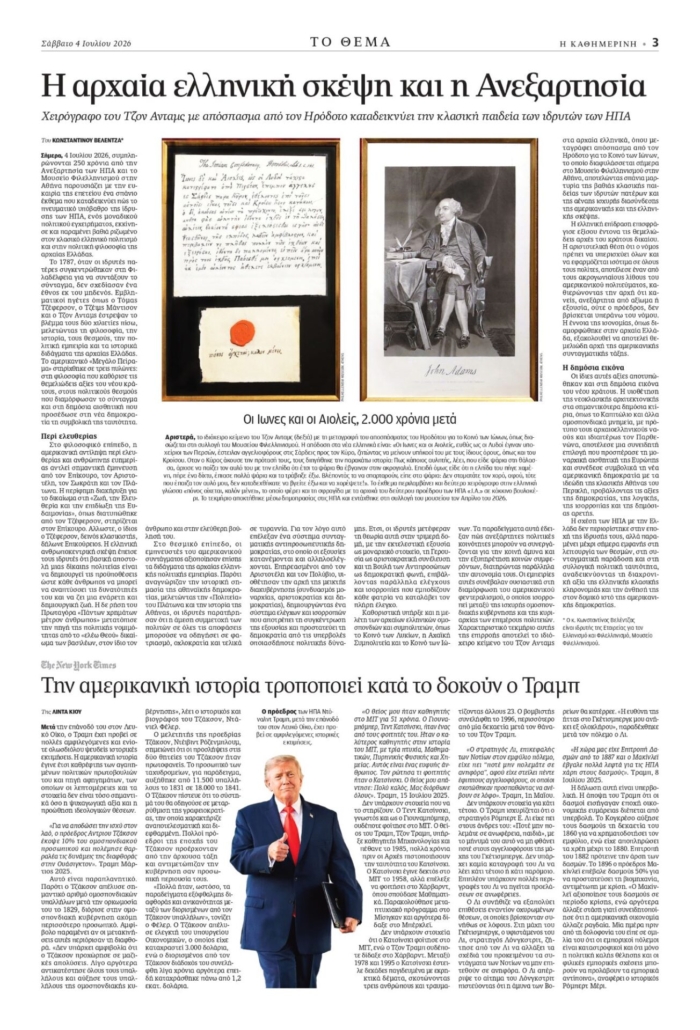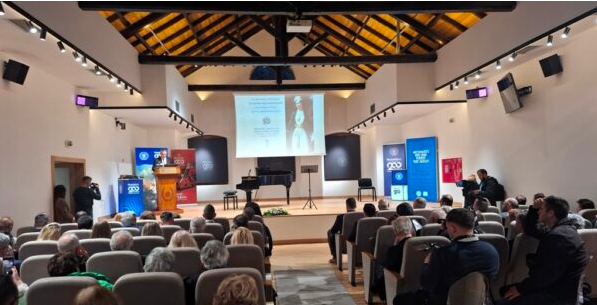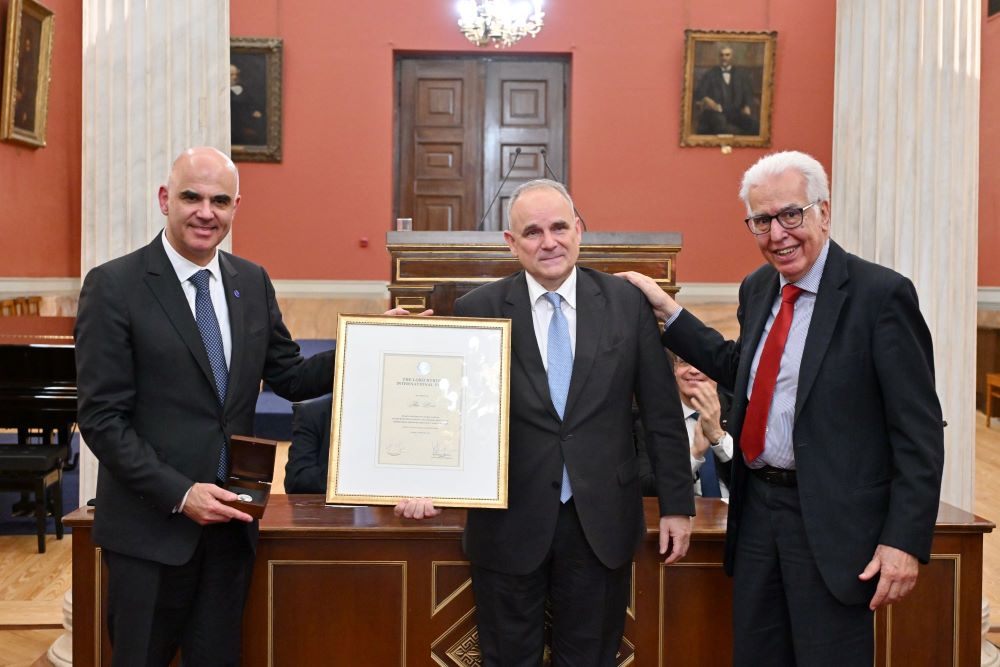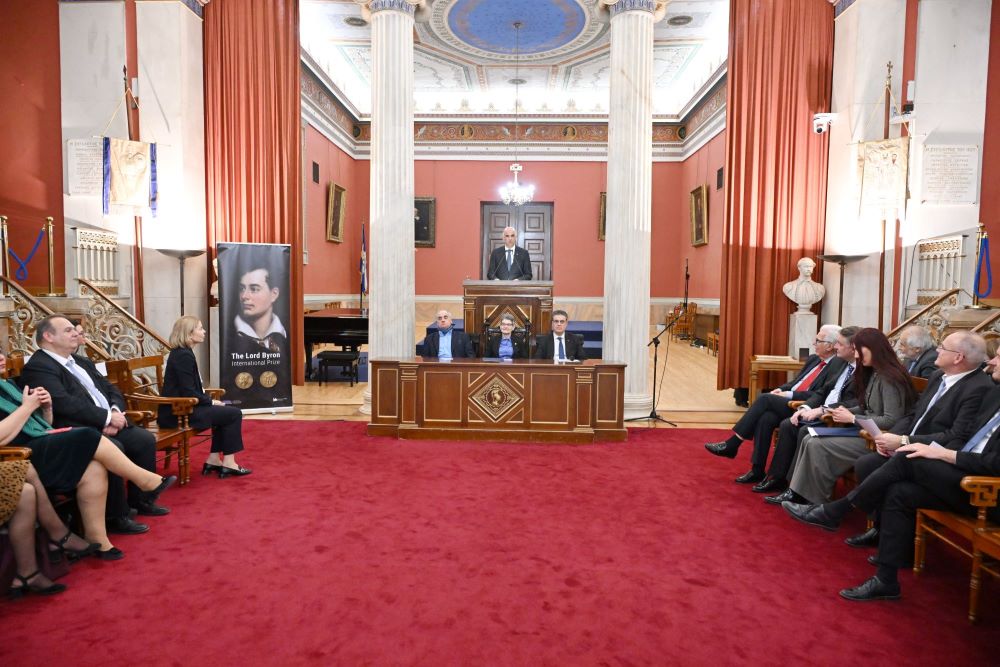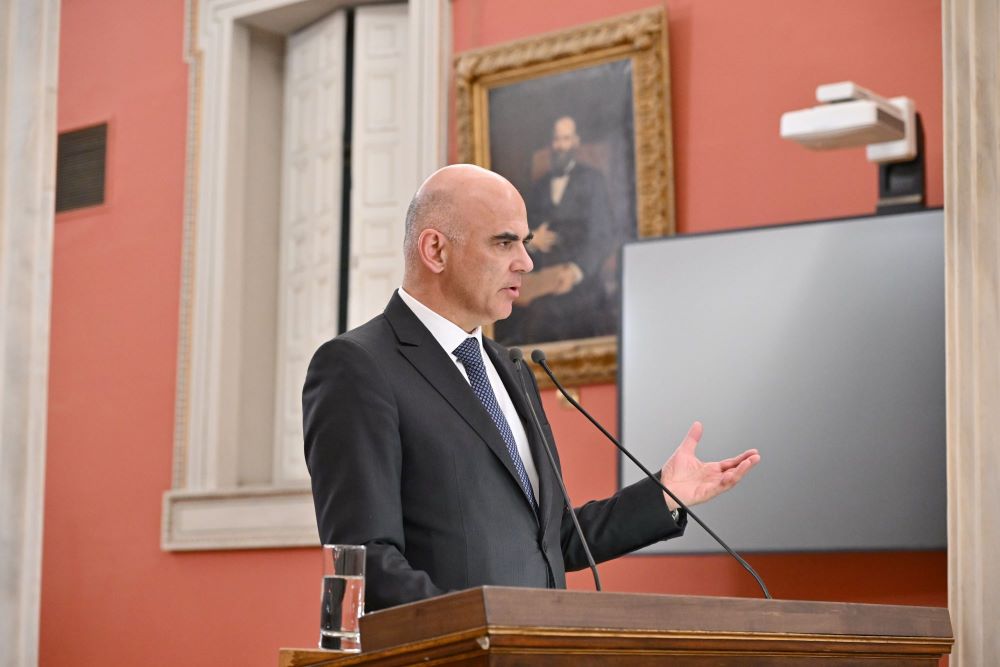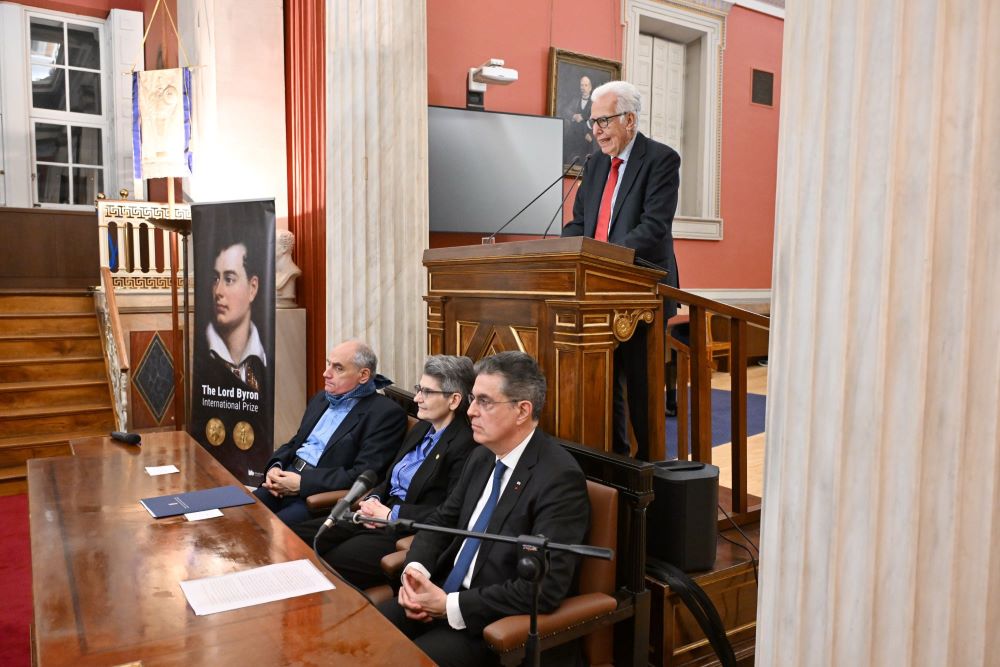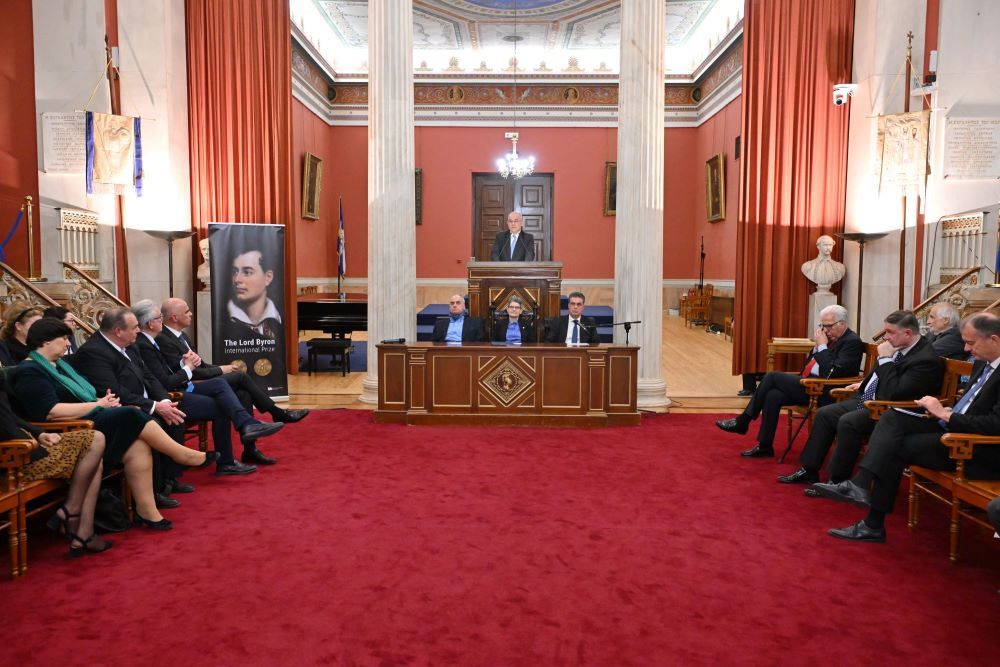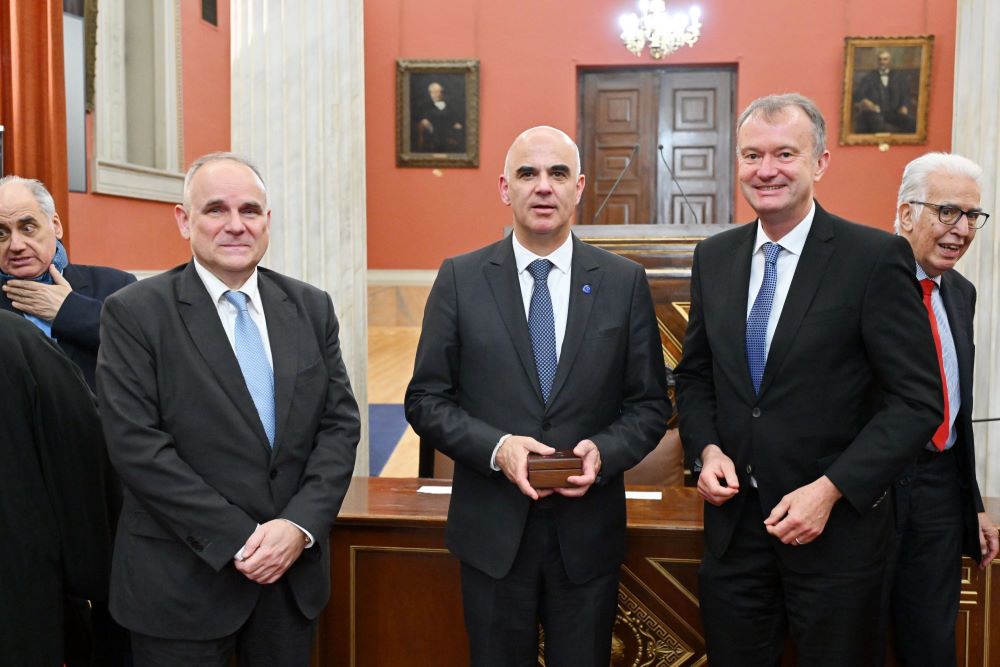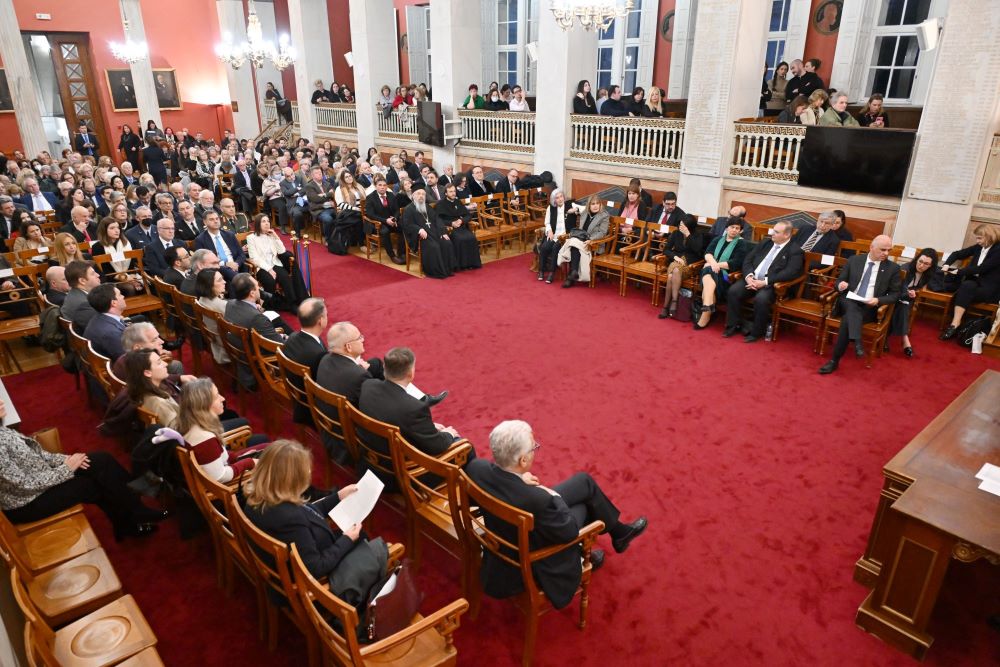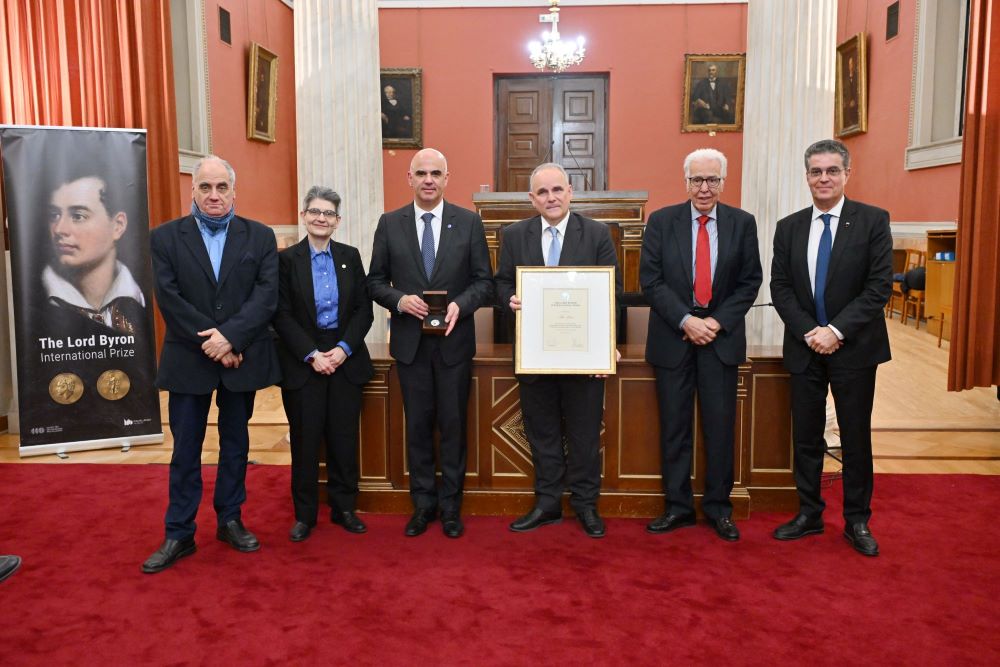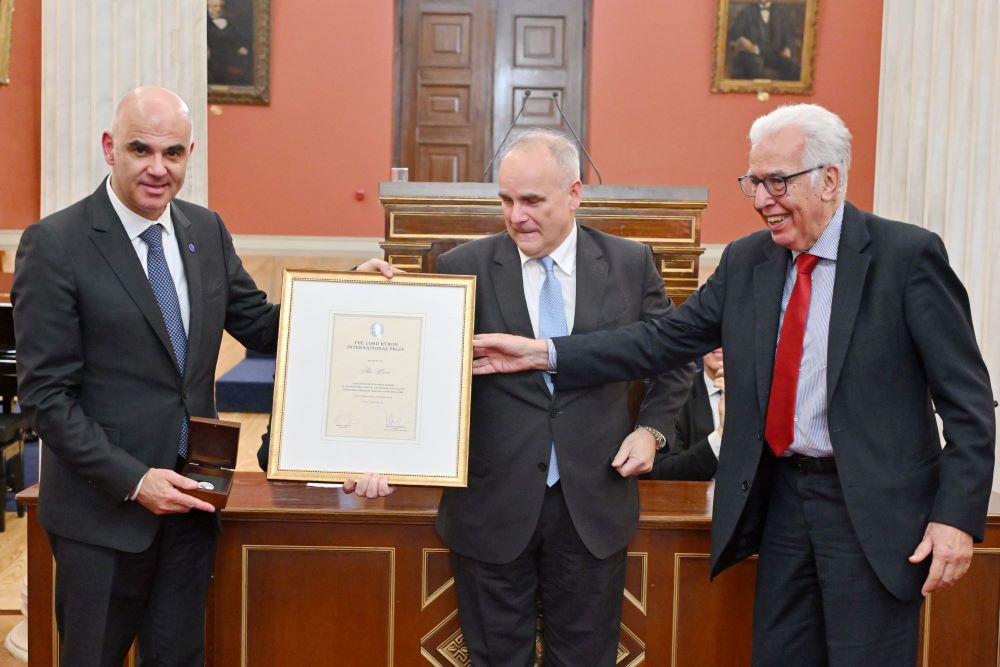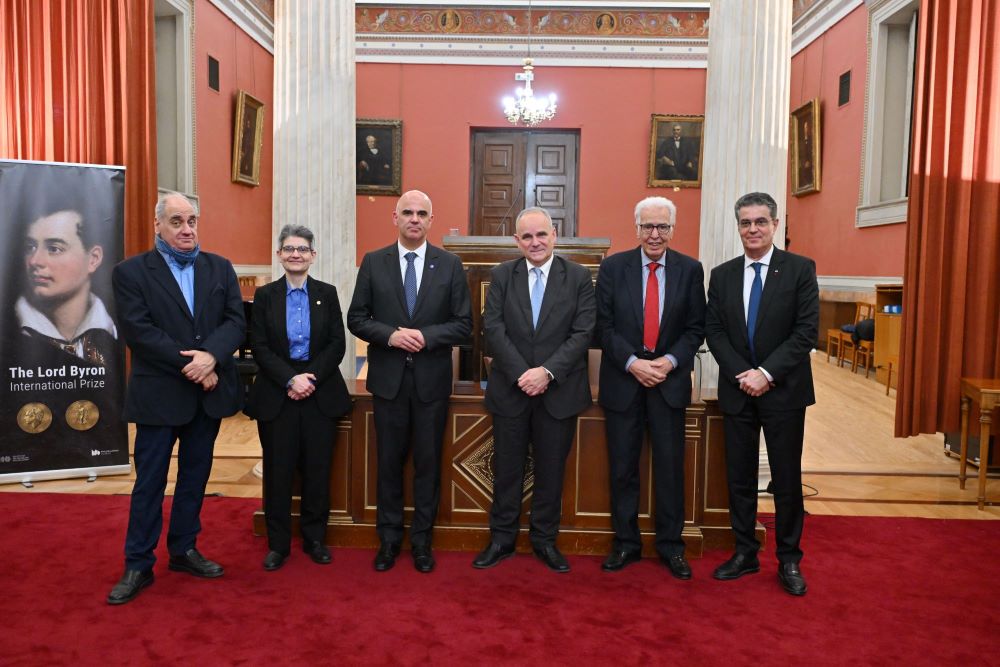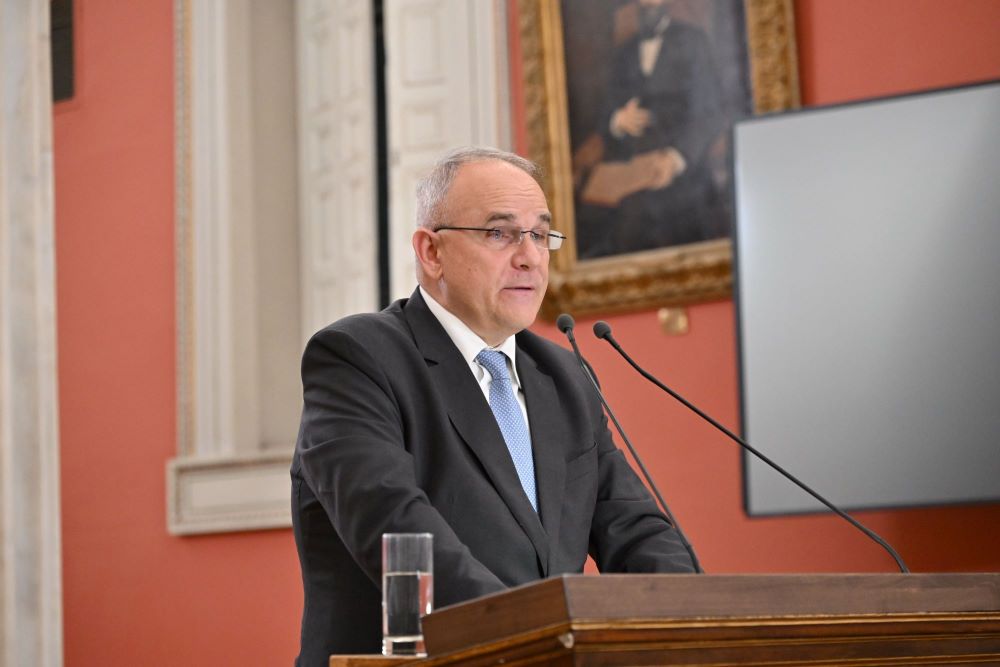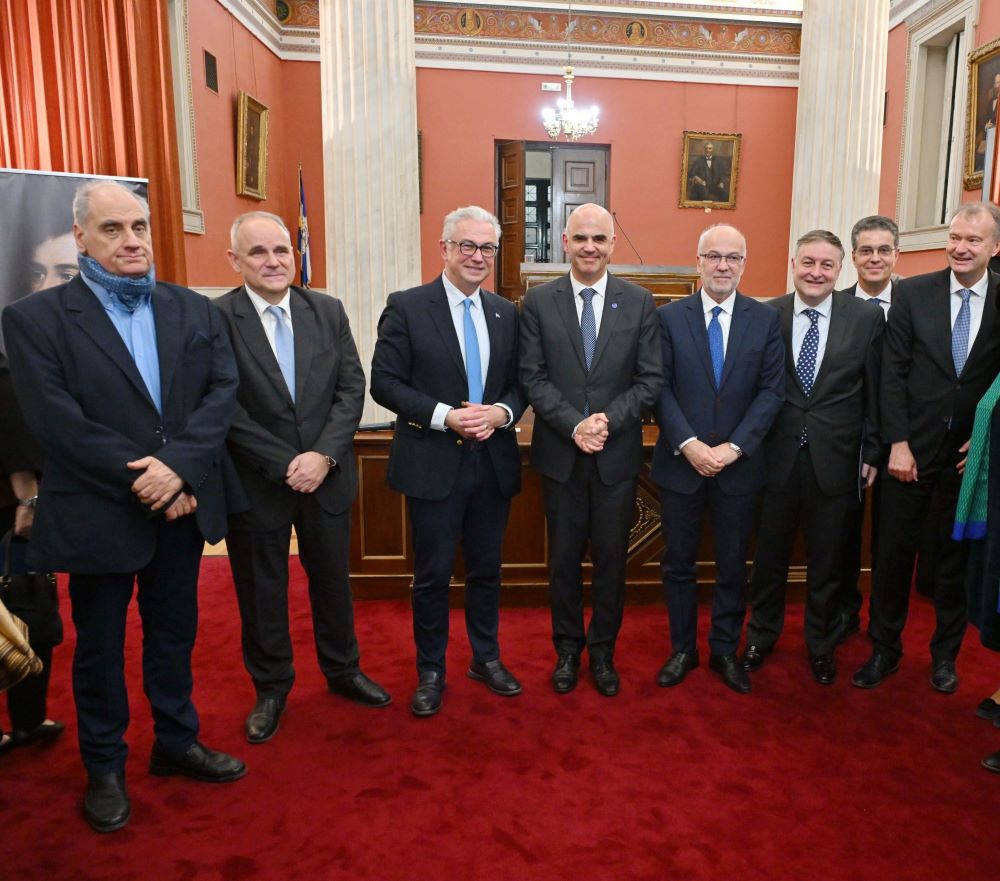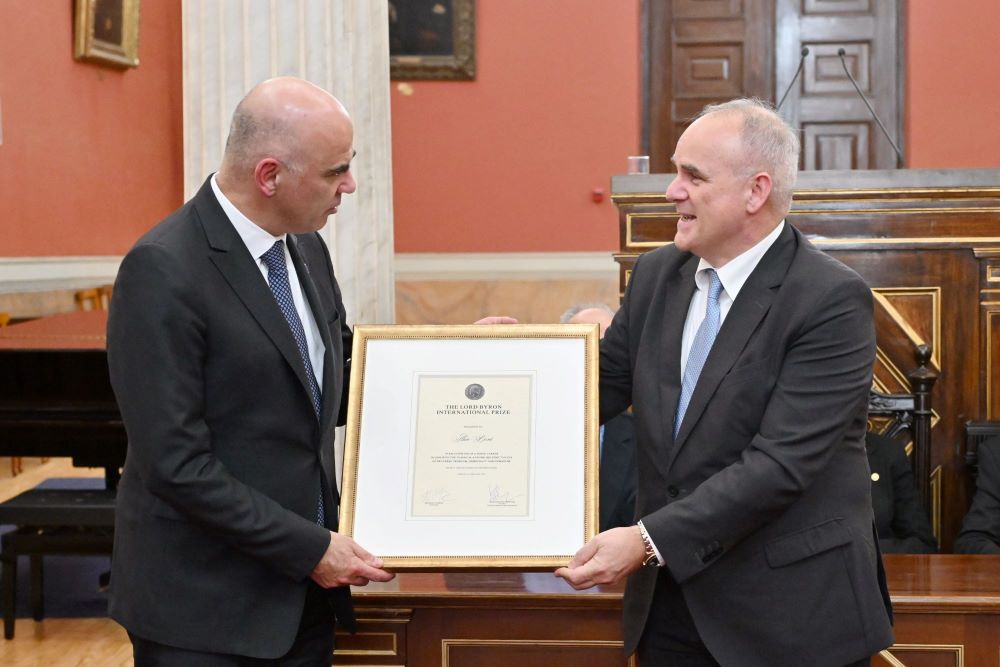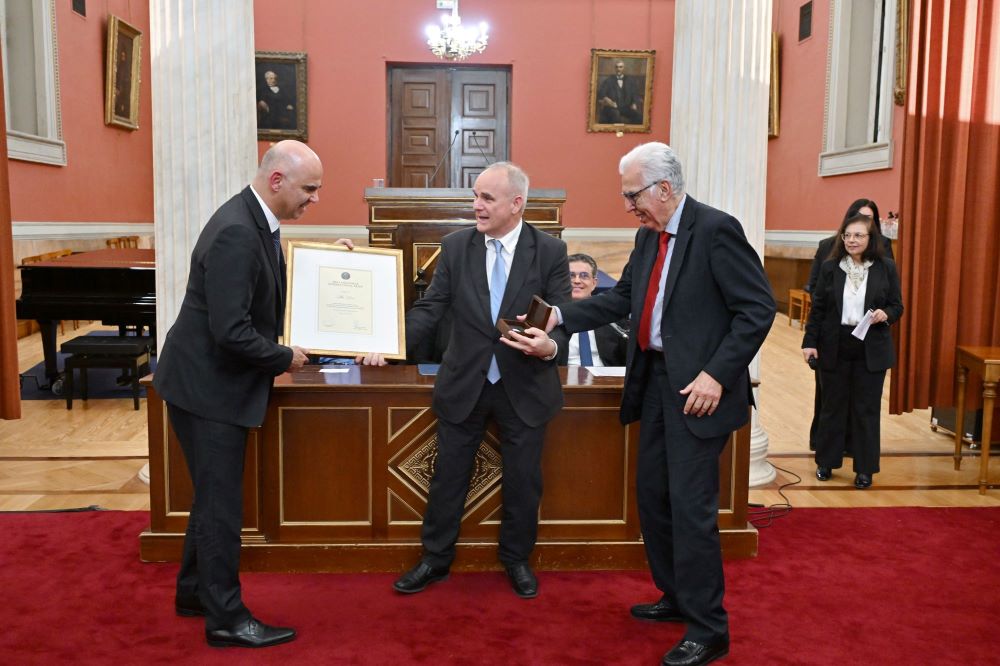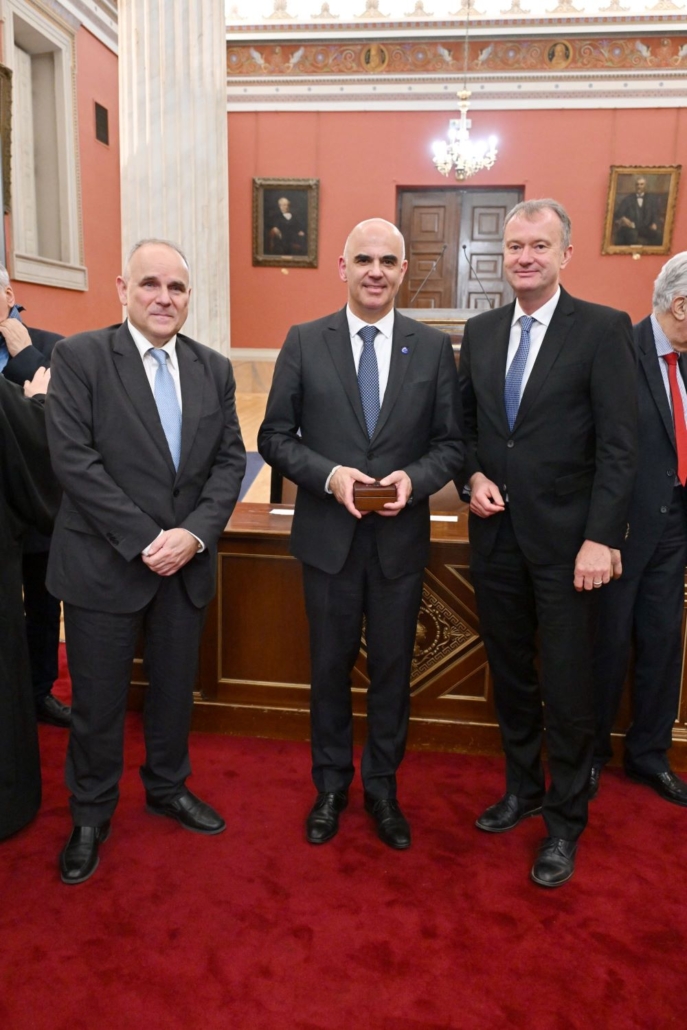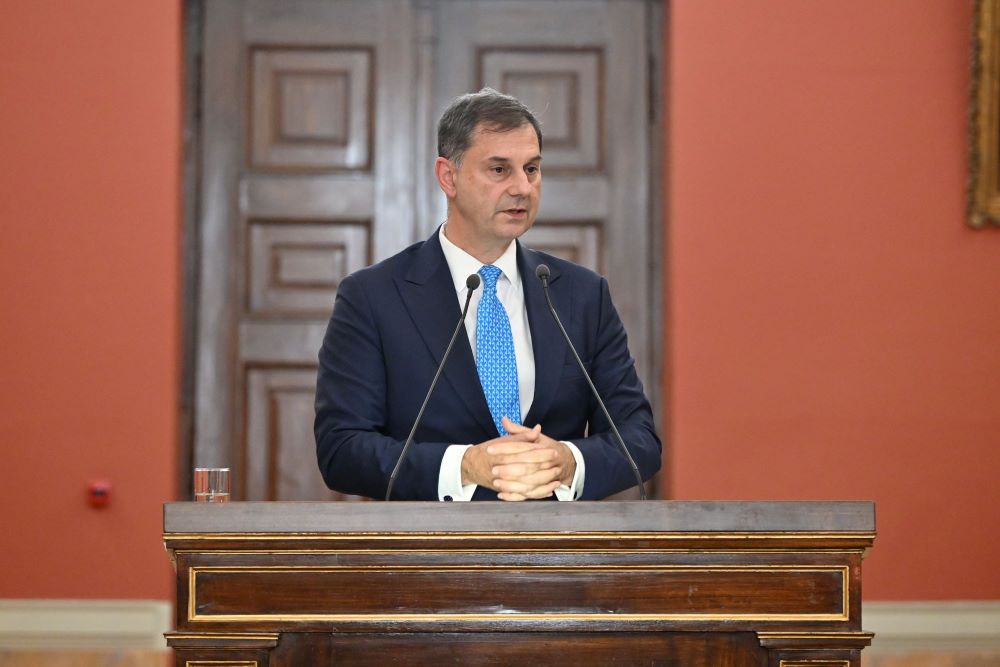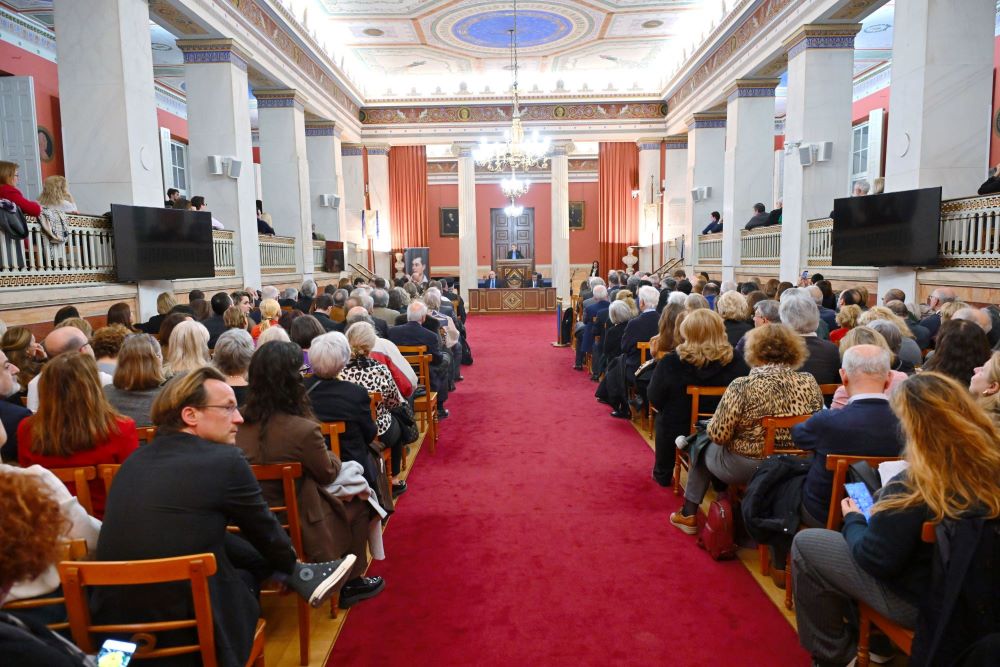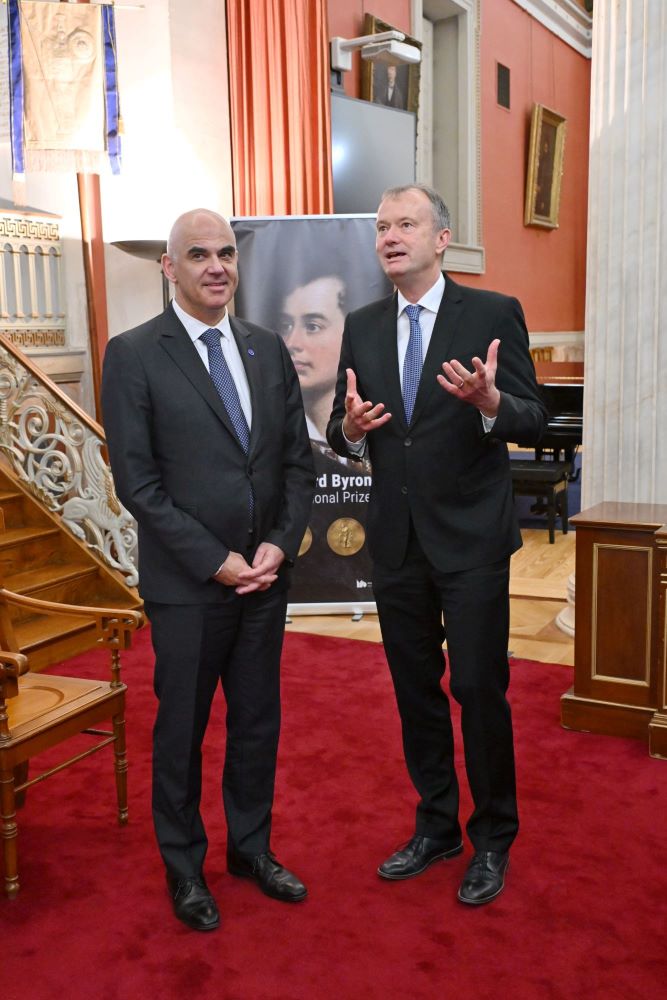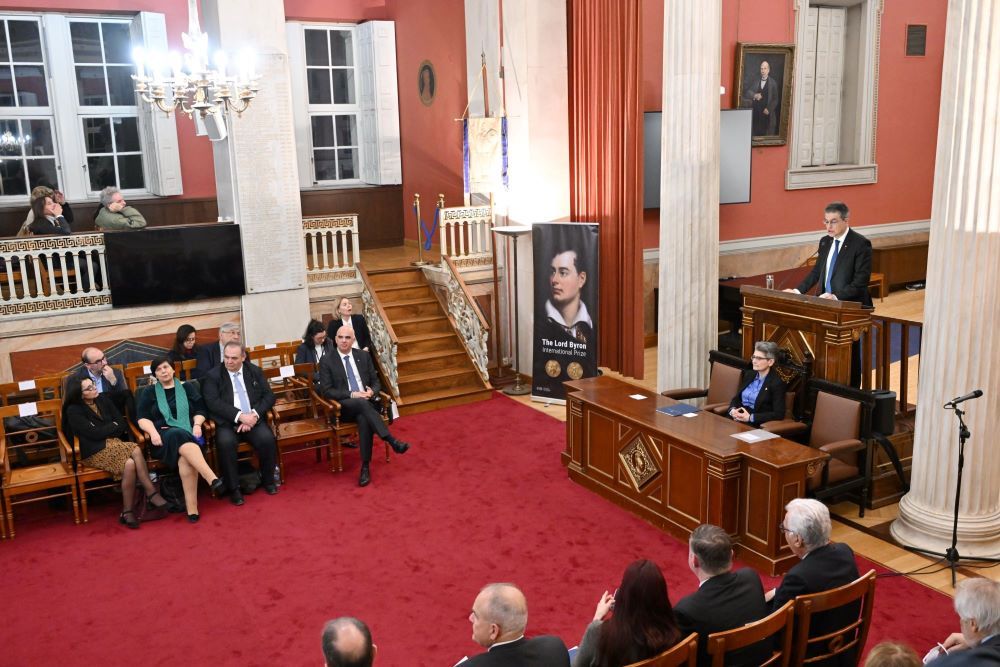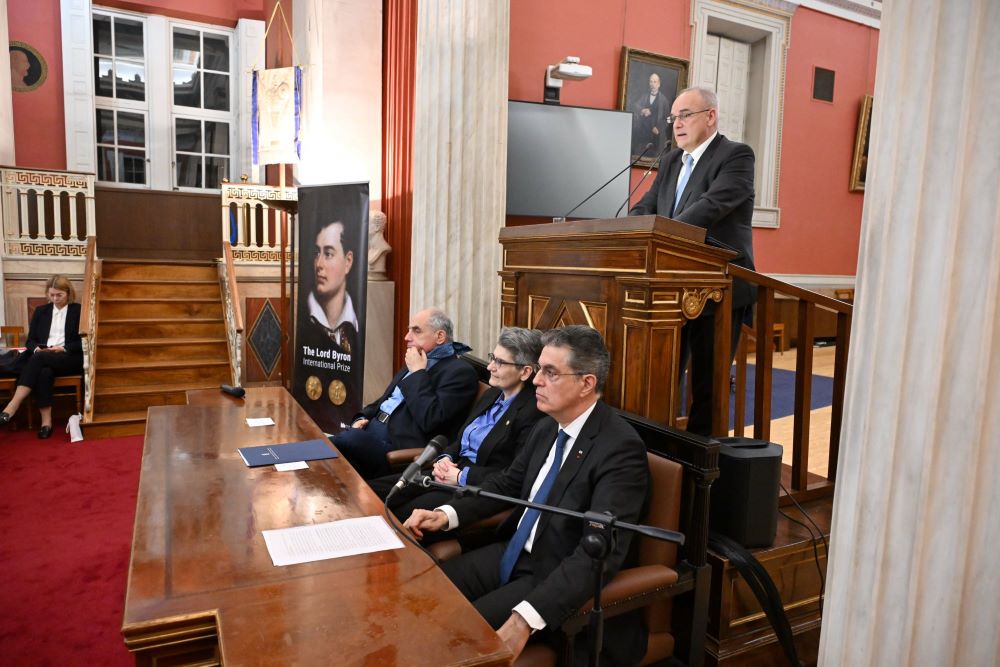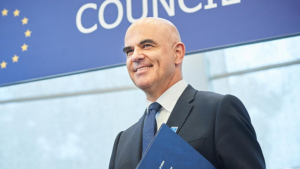
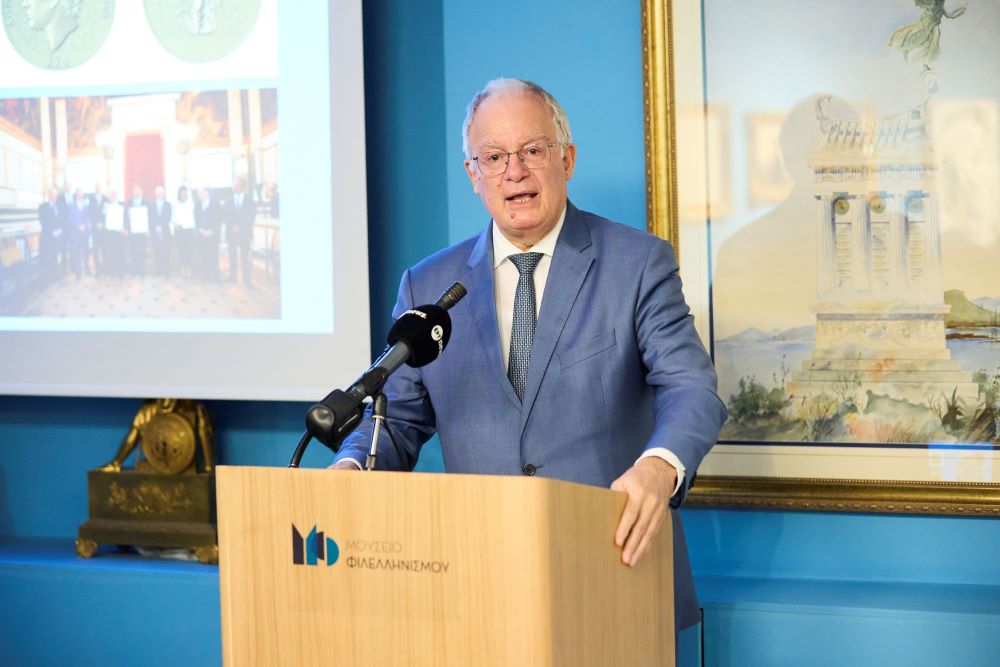
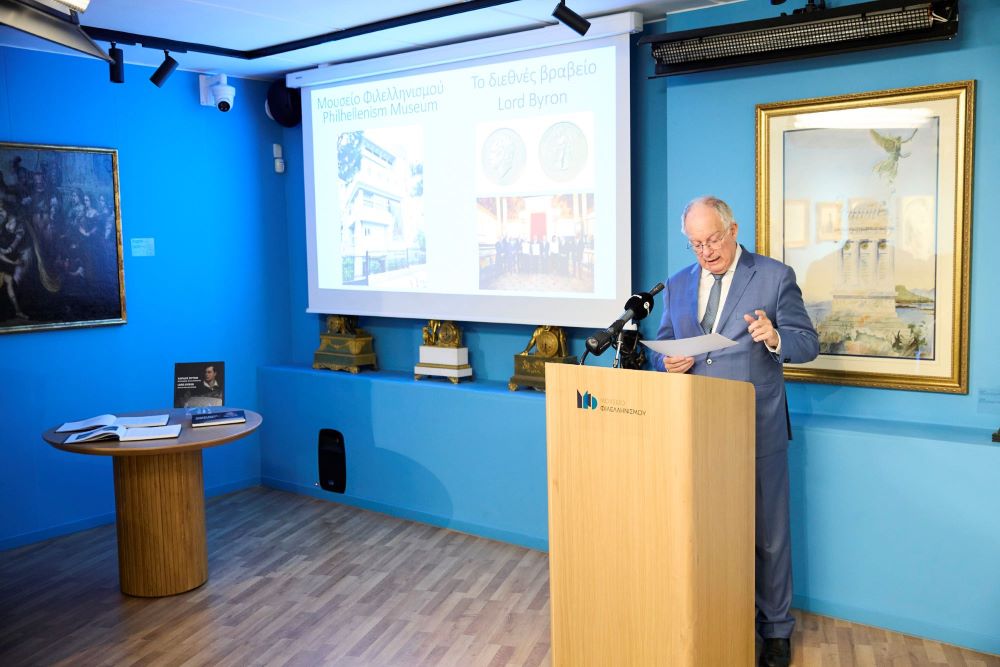
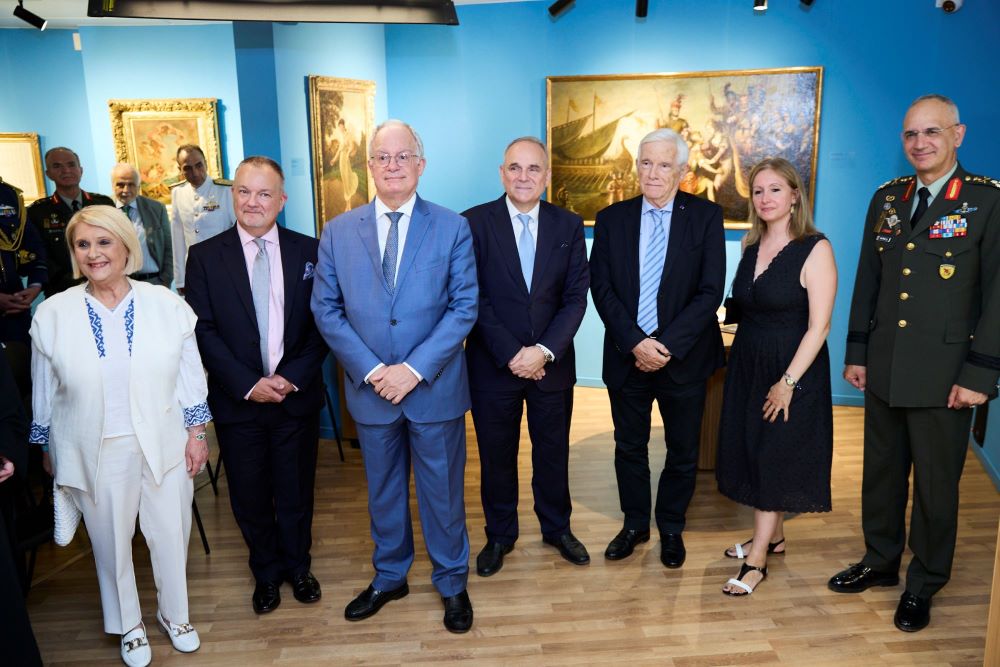
Mr. Alain Berset, Secretary General of the 46-member Council of Europe, during his first official visit to Greece was awarded the international Lord Byron Prize 2025 for Philhellenism, opening his speech in the Greek language, wishing to underline its importance to the civilisation worldwide.

Mr. Berset delivered an inspiring speech in Greek, honouring the coincidence that his first official visit to Greece and the day he received the Philhellenism Lord Byron Prize coincided with the day that the Greek language was recognised as the foundation of universal culture by UNESCO and was celebrated the first anniversary of the “International Greek Language Day”.

The donation of the Lord Byron Prize grant to the Ukrainian Red Cross Society

The honoree, who served as President of the Swiss Confederation twice (2018 and 2023), highlighted the cultivation of a European security environment as a priority for Europe, while his desire to offer the grant accompanying the Lord Byron Prize to the Ukrainian Red Cross evoke sympathy and emotion.

During his speech, he referred to our common challenges at the European level, such as accountability for Ukraine, judicial independence, the fight against corruption, and migration in full compliance with European human rights obligations.

The presentation of the International Lord Byron Philhellenism Prize institution was made by the President of the Academy of Athens, Mr. Nikiforos Diamandouros, and was followed by the presentation of the medal and diploma by the President of the Society for Hellenism and Philhellenism (SHP) and the Philhellenism Museum, Mr. Constantinos Velentzas.

Mr. Constantinos Velentzas referred to the core values of Greek culture on which civilized humanity is based, and to Lord Byron whose figure highlighted Philhellenism. He called attention to Mr. Berset’ s work in support of human rights, democracy and the rule of law, referring to “The New Democratic Pact for Europe”, to address the decline of democracy, misinformation and the ethical regulation of Artificial Intelligence, and to promote environmental protection as a fundamental human right.

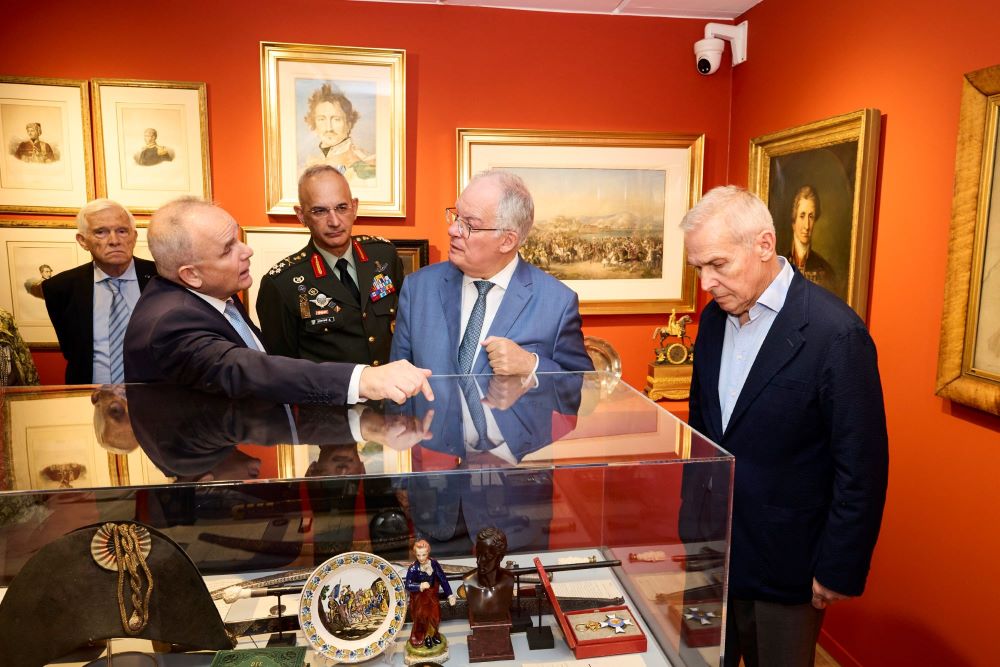
The ceremony was attended by representatives of the Presidency of the Hellenic Republic and the Government, the Minister of Justice Mr. George Floridis, the Deputy Minister of Foreign Affairs Mr. Haris Theocharis, the President of the Plenary of the Council of Europe Mr. Theodoros Roussopoulos, representative of His Beatitude Archbishop of Athens and All Greece Mr. Ieronymos II, representatives of the Anglican Church, representatives of the leadership of the Armed Forces, the Ambassadors of Switzerland, Sweden, Slovakia, Cyprus, Belgium, the chargé d’affaires of the embassies of the United Kingdom, France, Spain, Finland, Hungary, Poland, Azerbaijan, representatives of local government, Academicians, university professors, businessmen and a vast number of people.

The Lord Byron Award was presented at an event co-organized by the National and Kapodistrian University of Athens, the Law School and the Hellenic Society of International Law and International Relations (HSLIR).

Information:

SOCIETY FOR HELLENISM AND PHILHELLENISM (SHP) | PHILHELLENISM MUSEUM
12, Zissimopoulou str., Athens 11524 GREECE
Τ. +30 2108094750
www.eefshp.org | www.phmus.org


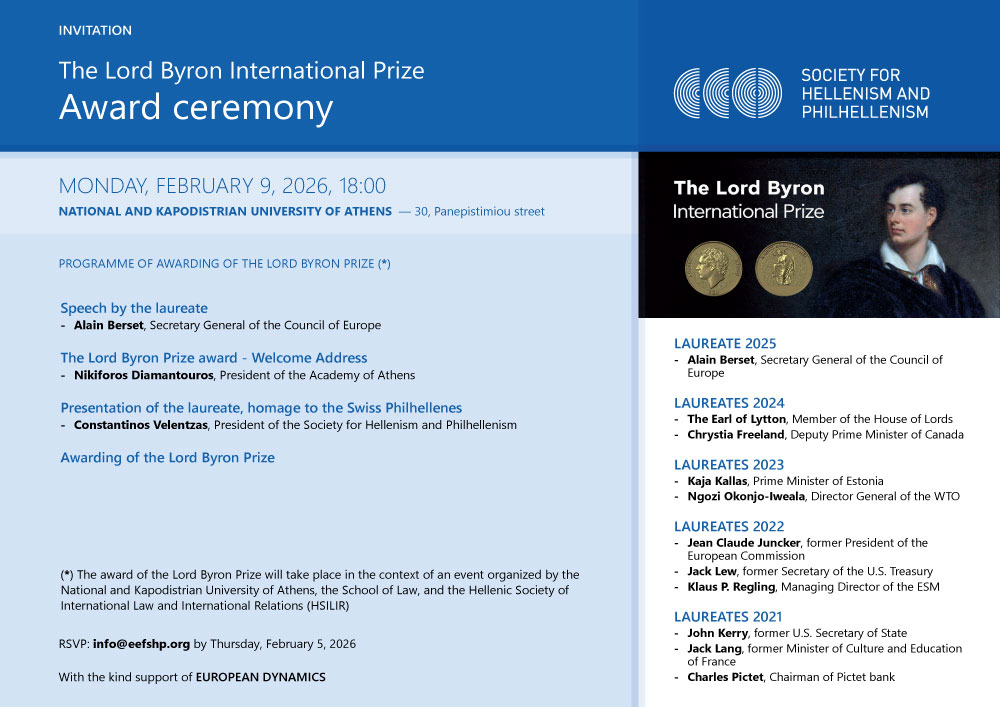
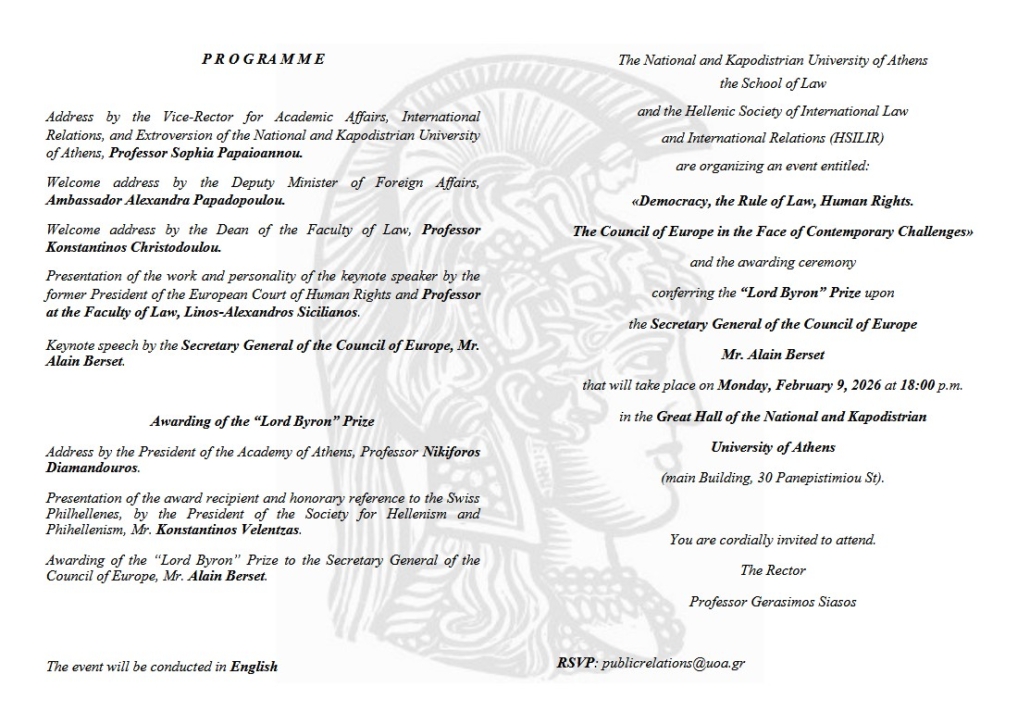
INVITATION

The Society for Hellenism and Philhellenism (SHP) has instituted since 2021 the International Lord Byron Philhellenism Award in the name of the great poet and Philhellene, Lord Byron.

The Prize is now awarded to Alain Berset, Secretary General of the Council of Europe, President of the Swiss Confederation (2018 and 2023).

The award ceremony will take place on Monday 9 February 2026 at 18.00 in the central premises of the National and Kapodistrian University of Athens (Panepistimiou 30, Athens 10679/ Map).


Free admission. Reservation required at: info@eefshp.org

To register please send us your name, title, mobile phone number, email.

Further to your registration, you will receive a confirmation email in order to attend the venue.

Limited number of seats

RSVP: by Thursday 5 February 2026, info@eefshp.org

Dress code: Business Formal


Dear Friends,

The Society for Hellenism and Philhellenism (SHP) and the Philhellenism Museum wish you a Merry Christmas and a Happy New Year 2026!

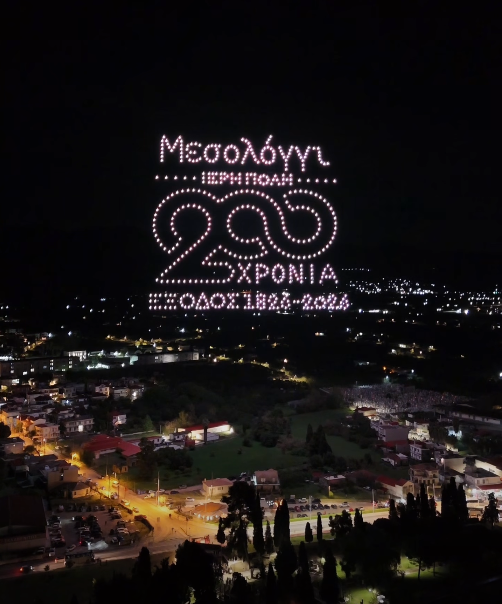
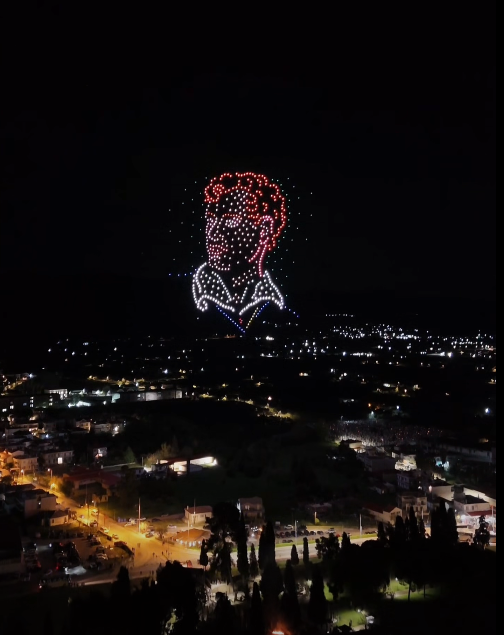
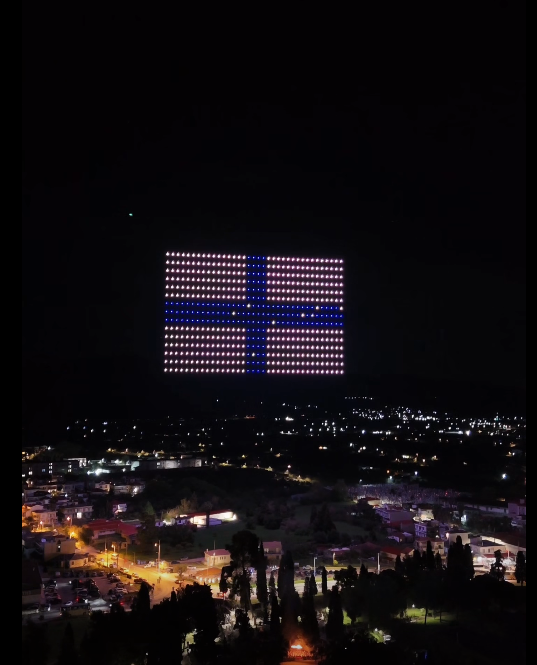
In 2026 we will organize a multitude of actions and anniversary events, including special thematic tributes regarding the 200th anniversary of the Exodus of Messolonghi. As every year, the Lord Byron Prize and Medal award ceremonies constitute the central axis of highlighting enduring Philhellenism, for which you will soon receive information and invitations.

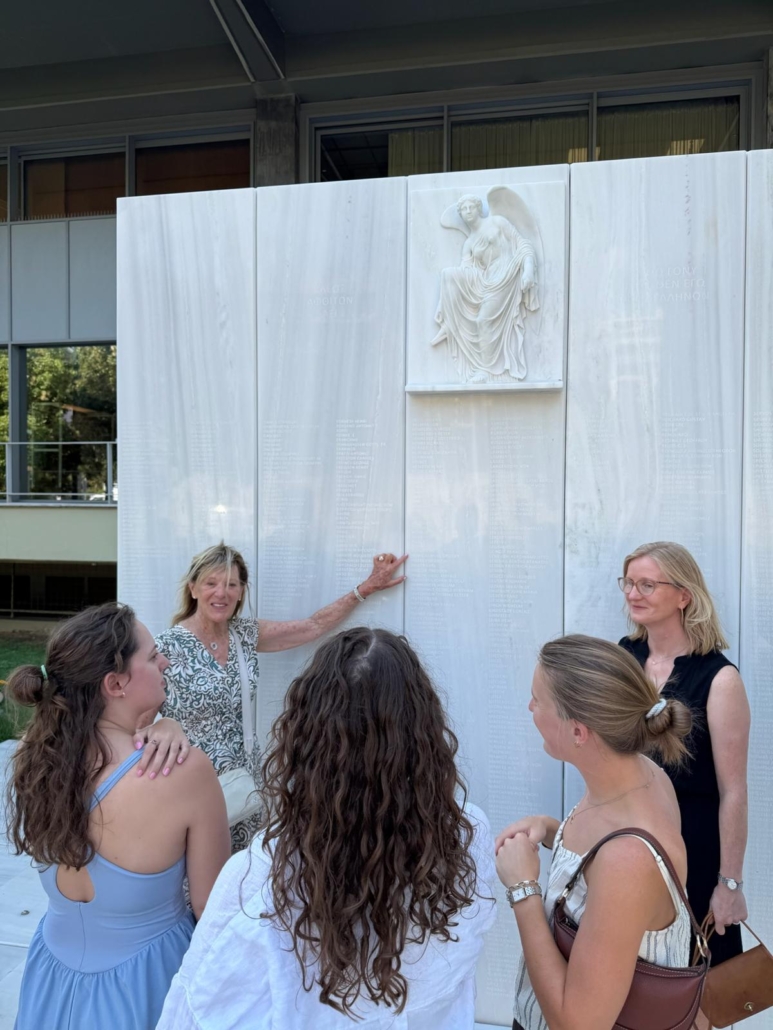
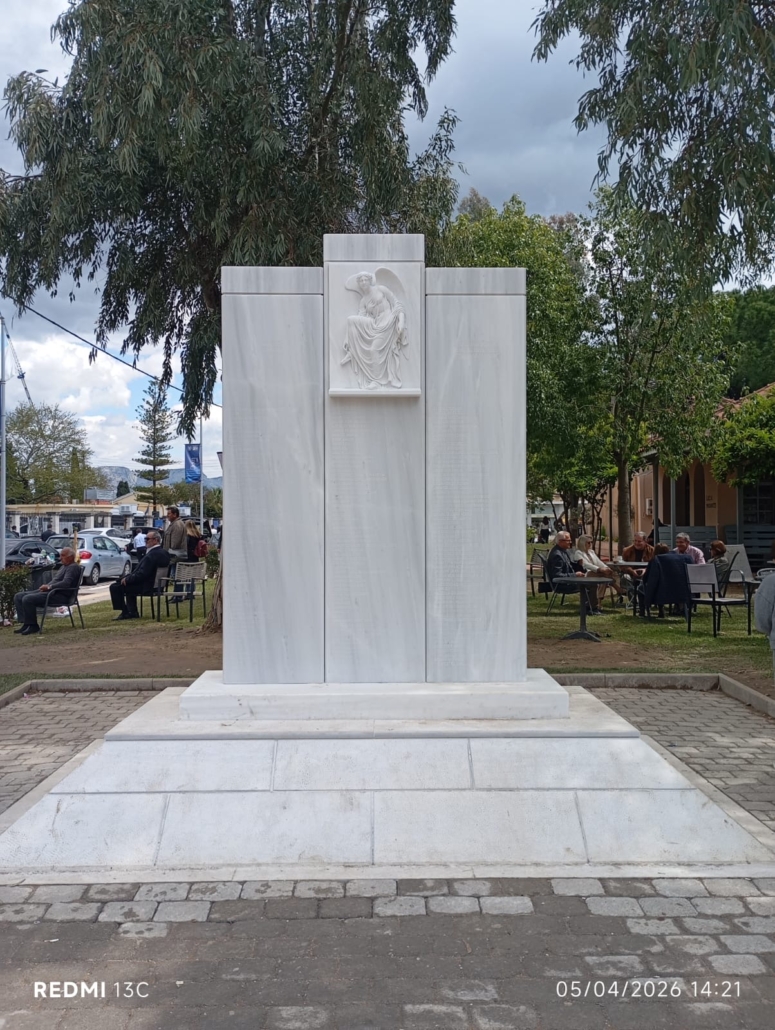
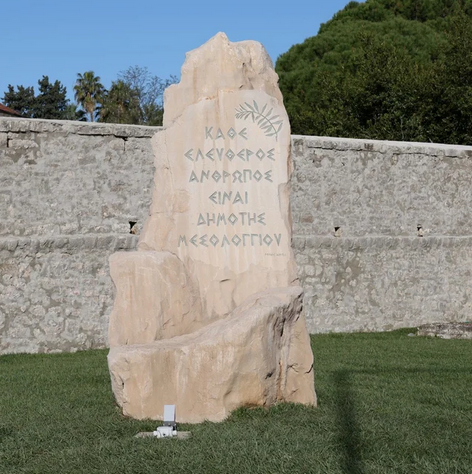
In 2025, we delivered the Philhellenes’ Monument in the center of Athens, which commemorates 2.000 names of Philhellene volunteers and activists who contributed to the struggle for the independence of Greece. In early December, the SHP and the Philhellenism Museum announced the erection of an equivalent monument in Messolonghi, at a special ceremony that took place in the presence of the Mayor of Messolonghi, Mr. Spyridon Diamantopoulos.

Philhellenism, emerging within the context of Romanticism, captivated the European liberal intelligentsia of the 19th century. Since 1824, committees to support the rebellious Greeks have been established throughout Europe with the aim of raising public awareness of the necessity of increasing funds through charity sales and exhibitions that would contribute to the struggle. Politicians, artists and intellectuals were moved by the Greek cause, each projecting, in a unique way, the ideal of freedom in the struggle of the Greeks. As an expression of nostalgia for an unattainable Antiquity, Greece became within the eyes of the Philhellenes a symbol of the West, Christian civilisation and democracy, in contrast to an East that was identified with barbarism and despotism.

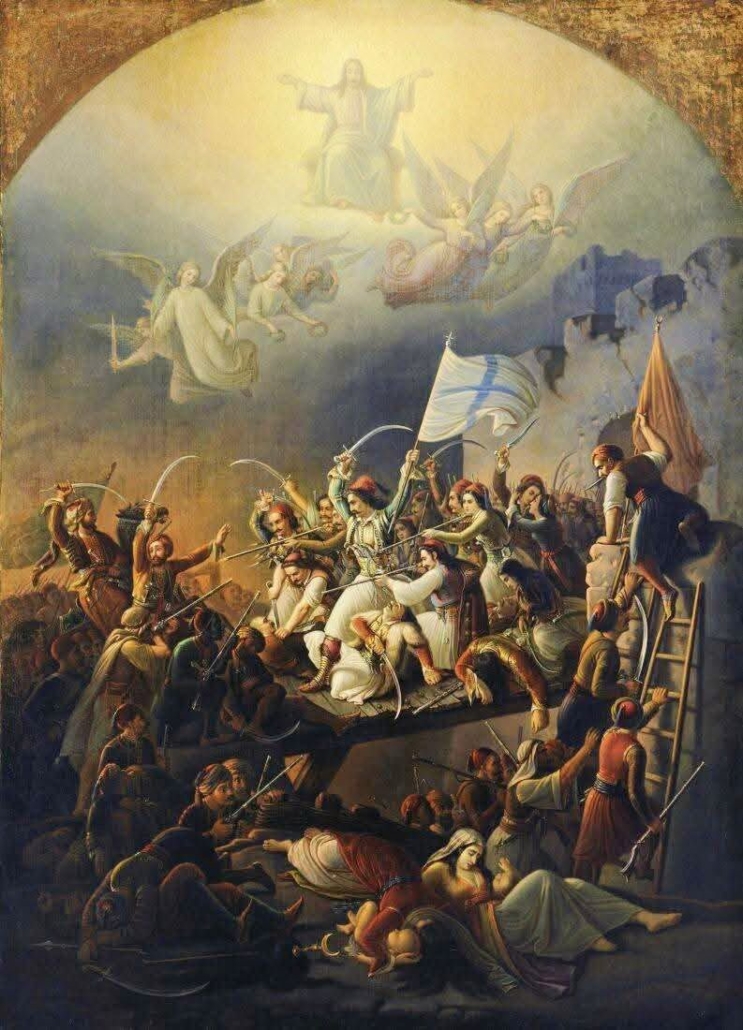
The Exodus of Messolonghi is the pinnacle moment of the Greek War of Independence, as with their heroic action, the Greeks declared to the international public opinion that they are notable descendants of the epic Greece of Marathon, Thermopylae and Salamis.

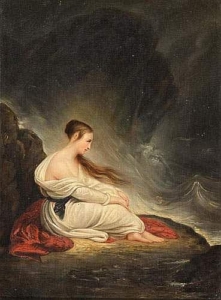
The French-Dutch painter Ary Scheffer captivated the public and critics with the modernity of his subject, where he captured the current events of the time and the historical representation of Greece on the ruins of Messolonghi through the allegory of a resigned female figure.


Depicted:

Ary Scheffer (1795-1858), Greece on the Ruins of Messolonghi, 1827. Oil painting on canvas.


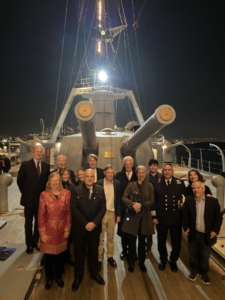
The SHP and the Philhellenism Museum participated together with the descendants of two important protagonists of the Greek War of Independence, Thomas Cochrane and Edward Codrington, in an event at the Floating Naval Museum Battleship “George Averov”, for the presentation of the Greek part of the archive of Lord Thomas Cochrane by the Ekaterini Laskaridis Foundation.

The archive contains over 1100 letters exchanged by Thomas Cochrane, mainly with chieftains of the Greek Revolution, which provide us with useful information about the important events that took place mainly during 1827.

The photo shows representatives of the Cochrane and Codrington families, and the SHP/ Philhellenism Museum, with the commander of the floating Museum Averov.

For information: info@eefshp.org


Under the auspices of the Greek Embassy in Bern, the tribute of the association “Cultural Circle of Friends of Greece in Basel” took place on November 14, 2025, with the speaker being the vice-president of the Society for Hellenism and Philhellenism (SHP) and scientific curator of the Philhellenic Library of Parisianou Editions, Professor emeritus of the Dresden University of Technology Konstantinos Papailiou.

In the auditorium of casts and antiquities of the University of Basel, after the introduction of Ms. Konstantina Boutsika, president of the association, and Professor Karl Reber, vice-president, the speaker presented lesser-known aspects of Swiss Philhellenism during the Greek Revolution of 1821. Specific emphasis was placed on the difficulties faced by the Philhellenes of the time, but also on their decisive contribution – in some cases even to the sacrifice of their own lives – in the struggle for Greek independence.

A fruitful and lively discussion followed, while the event concluded with a reception and exchange of views in a particularly friendly atmosphere.


INVITATION

The Polish Archaeological Institute at Athens cordially invites you to a lecture by Prof. Maria Kalinowska – Faculty of “Artes Liberales” of the University of Warsaw

Konstantinos Kanaris and his Fights in Polish Romantic Poetry

3/12/2025, 18.00 (EET)
PAIA Headquarters
Dionisiou Eginitou 7, 115 28 Athens

The lecture will also be transmitted via MS Teams. Please click here to join us online.

To attend in person, please register at: paia@amu.edu.pl.


Information:

Polish Archaeological Institute at Athens

Dionisiou Eginitou 7, 115 28 Athens

Τ. +30 210 729 2832


Award of the LORD BYRON Medal 2025

Laureate:  François de Callataÿ 


The distinction of the Lord Byron Medal is an initiative of the Society for Hellenism and Philhellenism since 2021 and in collaboration with the Academy of Athens is awarded, annually, to distinguished persons from the fields of diplomacy, culture and academic education, whose careers have contributed to society with work and actions that are in harmony with the values ​​of Hellenism. Moreover, the medal is also awarded to descendants of Philhellenes who offered their support during the period of the Greek War of Independence.


Laureate 2025:  François de Callataÿ 

An archaeologist and art historian specialising in Hellenistic history, François de Callataÿ is head of department at the Royal Library of Belgium, professor at the Université libre de Bruxeles, and director of studies at the École pratique des hautes études (Paris).
A member of the Royal Academy of Belgium (Class of Letters and Moral and Political Sciences) and the Institut de France.
He is the winner of the 2007 Francqui Prize.


Information:

SHP | Philhellenism Museum

www.eefshp.org  | www.phmus.org
T. +302108094750


Event at the French School of Athens

Friday 31/10/2025 at 12.00 noon

Conference Hall, 6 Didotou str., 10680 Athens


François de Callataÿ

Royal Library of Belgium / Free University of Brussels


THE REPUBLIC OF MEDALS (16th-18th centuries)

Or how the science of medals developed, in the light of the Fontes Inediti Numismaticae Antiquae website.

The Republic of Medals has long formed a vibrant community occupying a large place within the Republic of Letters.

To account for this, we have until now relied almost exclusively on printed works, which are numerous (nearly 2,000 dealing solely with numismatics for the 16th-18th centuries).

The FINA project (for Fontes Inediti Numismaticae Antiquae) aims to provide information for the tip of the iceberg, namely everything that has never been published. In its current state, the FINA website contains nearly 6,000 letters, 2,500 bibliographic entries, 2,350 individuals, and 450 handwritten works that have never been printed.


A Wiki-like structure, the website allows this information to be analyzed by submitting it to a wide variety of search options.


Information:

French School of Athens, Τ. +30 2103679900


At noon on October 20th, 1827, in the bay of Navarino, in the bay of Pylos in the Western Peloponnese, one of the largest natural harbors in the world, one of the most brilliant victories of the Greek War of Independence and the greatest naval disaster in world history took place.

In 1827, a year after the Exodus of Messolonghi, the looting, barbarities and atrocities against the Greeks strengthened Philhellenism in Europe. The Great Powers intervened in the Greek question, supporting the Greeks and paving the way for independence with the Naval Battle of Navarino.

The British Philhellene Prime Minister George Canning, has given clear instructions to implement the Treaty of London, even by force of arms. British Admiral Edward Codrington enters the Bay of Pylos with his fleet, and sends a Greek officer to deliver a message to Ibrahim. He is shot by a Turkish sailor and the naval battle begins.

The naval Battle of Navarino is the culmination of naval operations during the Greek War of Independence and the only naval battle worldwide that took place with anchored ships. The Turkish-Egyptian fleet, with 89 warships and over 100 including the transport ships, estimates that it is superior to the only 27 ships of the allies and opens fire.

The ships were so close that their masts were entangled. The noise of the cannons echoed in Zakynthos and Kythera, while clouds of smoke covered the wider area. The allied ships, in addition to the cannons of the opponents, also faced cannons from the Turkish forts on mainland. By the afternoon, the seamanship of the allies and the unity of the Greeks had determined the victory. The armistice was signed aboard Codrington’s flagship.

European public opinion perceives the victory at Navarino as a victory of civilised peoples who united to reverse the bloodshed of the struggling Greeks. It was the first military operation in history aimed at supporting a nation struggling for its independence.

During the 20th century, Jacques-Yves Cousteau explored the bottom of the bay, even locating wrecks of the ships that participated in the naval battle, evidence of Greece’s struggle for freedom.

On three islands surrounding the Bay of Navarino, an equal number of monuments commemorate the contribution of the allied Philhellenes to the creation of the independent Greek state, while in the center of Athens three streets bear the names of the Philhellenes who led to the historic victory (Codrington, Derigny, Hayden).

At the Philhellenism Museum, important historical documents, rare works of art, and personal belongings of leading figures depict the emblematic Naval Battle of Navarino.


Above is depicted an 1831 oil painting by the British painter John Christian Schetky (1778-1874)


Information:

SHP | Philhellenism Museum

www.eefshp.org  | www.phmus.org
T. +30 2108094750

*Under the auspices of H.E. the President of the Hellenic Republic Mr. Konstantinos An. Tassoulas
*In collaboration with the Hellenic Parliament


Date: 10 October 2025

Hours: 09:00 – 19:00

Venue: Auditorium Theo Angelopoulos – French Institute in Greece – 31, Sina Str., Athens

Free admission | Simultaneous translation  | Live broadcast!

The French Institute in Greece (Institut Français de Grèce), the French School of Athens and the Institute of Historical Research of the National Hellenic Research Foundation are organising, with the participation of the Publishing House Anavasi, on Friday 10 October 2025, a conference on the topic of the “French Scientific Mission of Morea”, which took place in the Peloponnese in 1829.
Almost 200 years since this significant Mission, the conference is aiming to commemorate and comment on the important work that was accomplished, to explore the scientific imprint of the work and the ways in  which it influenced the subsequent interdisciplinary and iterative approaches to the field.
This conference will be the first in a series of actions that will be completed in 2029.


Scientific and Organising Committee

Matthieu Abgrall, Educational Attaché for Scientific and University Cooperation, Deputy Director of the French Institute in Greece
Véronique Chankowski, Director of the French School of Athens
Gilles de Rapper, Director of the Department of Modern and Contemporary Studies of the French School of Athens
Ourania Policandrioti, Director of Research, Institute of Historical Research / National Hellenic Research Foundation, Coordinator of the Modern Greek Research Sector – IHR/NHRF
George Tolias, Professor, École Pratique des Hautes Études, Paris – former Director of Research, Institute of Historical Research / National Hellenic Research Foundation
Yannis Saitas, Architect, Urban Planner, Ethnologist. Research, design, editing of the publication “The Work of the French Scientific Mission of Morea 1829-1838, Part A”, 2011 and Part B”, 2017, published by Melissa House”.
Katerina Spiropoulou, Deputy Cultural Attaché for scientific and university cooperation, French Institute in Greece
 Ivi Adamakopoulou, Anavasi Publications

The French Scientific Mission of Morea

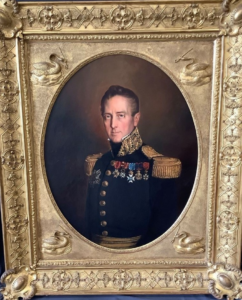
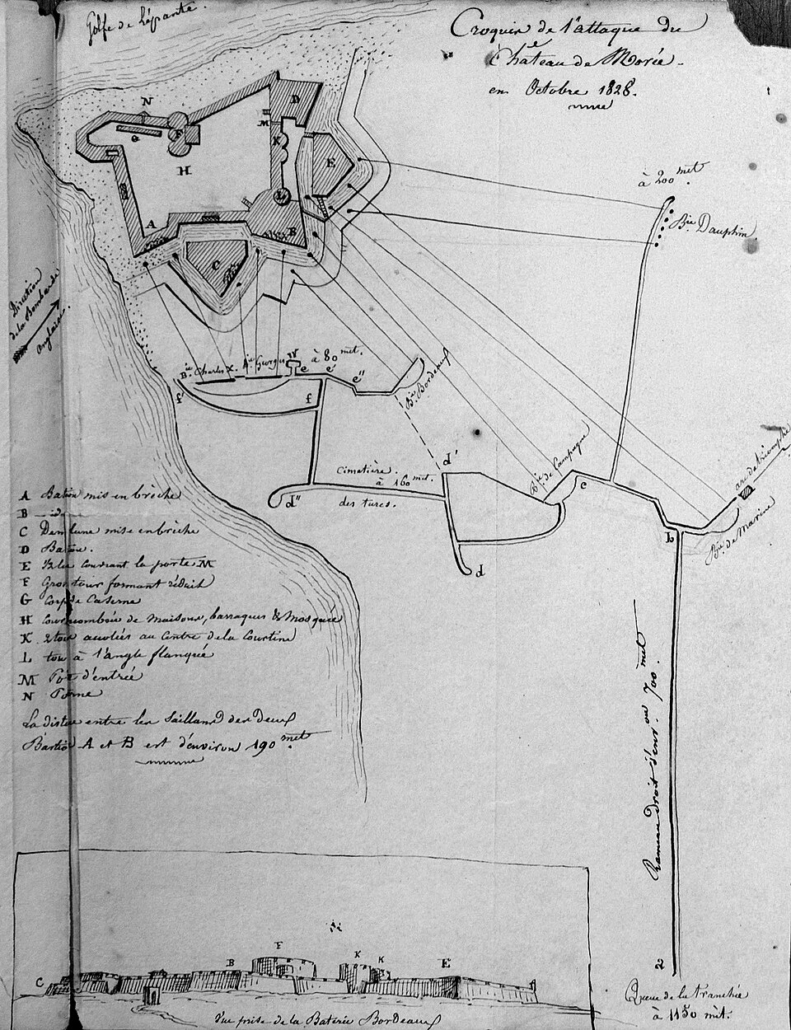
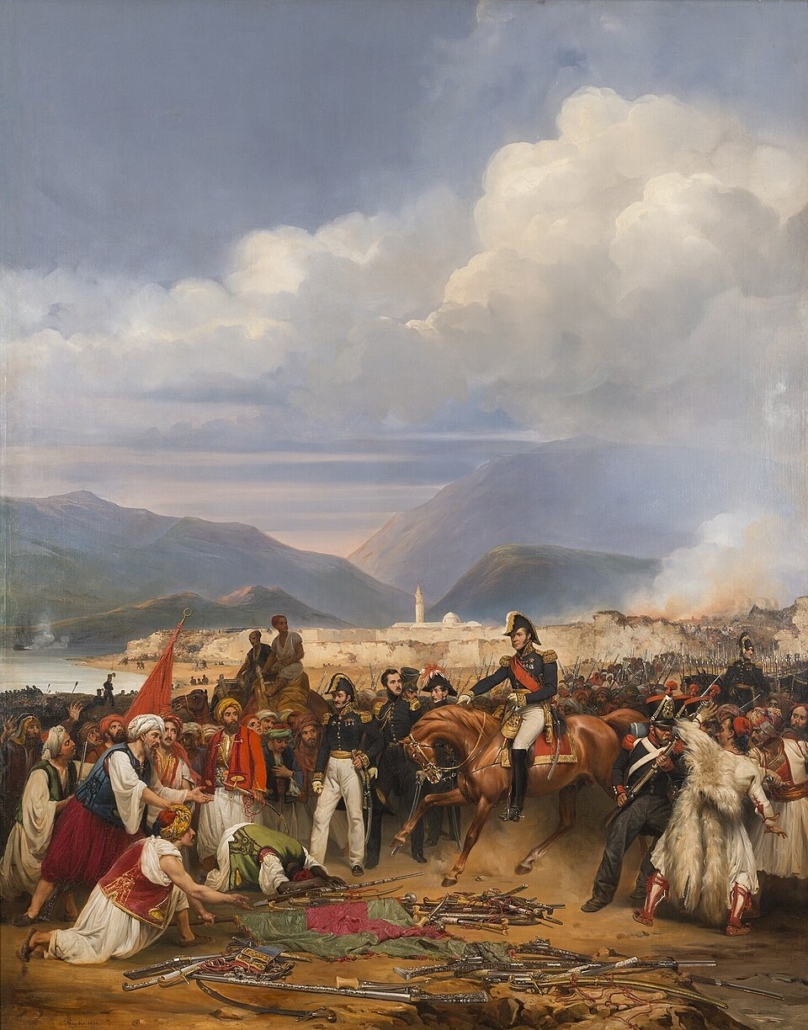
On March 3, 1829, twenty French scientists, geographers, naturalists, architects and Hellenistic scholars, at the request of Governor Capodistrias, landed in Navarino, which had just been liberated by Ibrahim’s troops (1827) and the French military expedition under General Maison (1828), in order to explore Greece. Their aim was, on the one hand, to gain an in-depth understanding of the nature and culture of Greece and, on the other hand, to offer the Greek administration modern management and development tools. French scientists explored mainly the Peloponnese, but also the Cyclades and Attica. They mapped the area and collected data on the demography, natural resources and infrastructure, nature and antiquities of the fledgling Greek state.

The French Scientific Mission of Morea (also referred as “Morea Expedition”) consisted of three Departments of specialists in natural sciences, archaeology and fine arts and a Topographic Company of 25 army engineers. The findings of the work were published in maps and in 8 imposing volumes between 1831 and 1838, which are accompanied by significant pictorial and cartographic documentation.

The significance of the Mission is manifold. It offers a complete and thorough depiction of the Peloponnese and other regions just after the Revolution, which is an example of the scientific methodology of the era and the emergence of new sciences and cutting-edge technologies, which is an example of the scientific methodology of the era and the emergence of new sciences and cutting-edge technologies, such as statistical demography and geodesy, the interpretation of geological formations and the network of water resources, the excavation and topographic documentation of monuments, the inventory of minerals, fauna and flora.

Upon completion of the activities on the 200th anniversary of the Mission, we want to believe that we will have covered all aspects of its scientific work and will have highlighted its current impact and continuity.


CONFERENCE PROGRAMME


09:00 – 10:00
OPENING – GREETING REMARKS
🔹Embassy of France in Greece, French School of Athens, National Hellenic Research Foundation

INTRODUCTION
🔹 The publication “The Work of the French Scientific Mission to Morea 1829-1838, Part A, 2011 and Part B, 2017, published by Melissa House”.
Yannis SAITAS (Architect, Urban Planner, Ethnologist)


10:00 – 11:30FIRST SESSION – THE CARTOGRAPHIC WORK 

Moderator: Matthieu ABGRALL (Associate for scientific and university cooperation, Deputy Director of the French Institute in Greece)

🔹The geodetic works of Moreas (1829-1830) as a foundation for cartography
Pierre BRIOLE, (CNRS Research Director, Ecole Normale Supérieure Paris)

🔹Geographies of the possible: society, environment and national identity in the work of the Morea Scientific Mission (1829)
George TOLIAS (Professor, École Pratique des Hautes Études, Former Director of Research, Institute of Historical Research – National Research Foundation)

🔹Digital reconstruction of the cartographic work of the French Scientific Mission
Eleni GKADOLOU (Digital Asset Manager, British School of Athens, Doctor of Geography, Agronomist and Surveyor Engineer)

🔹The map of the French Scientific Mission as evidence for the study of the settlements and population of the Peloponnese during the period of the Revolution: research results and future prospects
Michalis FESTAS (Postdoctoral researcher at the Institute of Historical Research (IHR) of the National Hellenic Research Foundation (NHRF), member of the Digital Historical Cartography Laboratory of the IHR/NHRF)


12:00 – 13:30SECOND SESSION – LIFE AND EARTH SCIENCES
Moderator: Gilles DE RAPPER (Director of Studies – Department of Modern and Contemporary Studies)

🔹The Botanical Mission to the Peloponnese
Sophia RHIZOPOULOU (Professor Emeritus of Plant Ecophysiology, Department of Biology, Section of Botany, National and Kapodistrian University of Athens, Head of the KEDIVIM “Cultural Botany” programme)

🔹The Morea Scientific Mission: the origins of the geoarchaeological approach
Eric FOUACHE (Professor, Sorbonne Université – UR Médiations)
and Antoine CHABROL (Doctoral Candidate, Sorbonne Université -UR Médiations)

🔹The Morea Mission in the Plantarium of the National Museum of Natural History in Paris
Clémence PAGNOUX (Associate Professor at the National Museum of Natural History, BioArch UMR 7209 MNHN CNRS Inrap, Paris)


15:00 – 17:00THIRD SESSION – HISTORY AND ARCHAEOLOGY
Moderator: Ourania POLYCANDRIOTI (Director of Research, Institute of Historical Research / National Hellenic Research Foundation)

🔹Letters, press, books, for the love of Greece. Ambroise Firmin-Dido and the Scientific Mission of the Morea.
Emmanuelle COLLAS (Historian, Doctor of Philology and Associate Professor of Greek History, publisher)

🔹A different scientific mission of Morea: the “humble” Viety discovers the Peloponnese
Clémence WEBER-PALLEZ (Associate Professor of Greek History, Laboratoire PLH – Université Toulouse 2 Jean Jaurès)

🔹Raybaud’s journalistic adventure in Greece
Vincent TOUZE (Doctor of Political Science, Graduate of Higher Studies in Public Administration)


17:00 – 18:30FOURTH SESSION – FROM PAST TO PRESENT. THE EVOLUTION OF CARTOGRAPHY IN THE 21ST CENTURY
Moderator:  Pinelopi MATSOUKA (Anavasi Publications)

🔹Geoinformatics and applications for the future of cartography
Angelos ADAMAKOPOULOS (Creator IGN RANDO App)

🔹Map reading modeling
Vassilis KRASSANAKIS (Associate Professor, University of West Attica, PhD in Engineering, NTUA, Diploma in Agronomy and Surveying Engineer, NTUA)

🔹Challenges in Future Cartography: Artificial Intelligence and Big Geospatial Data
Christos CHALKIAS (Professor, Harokopio University of Athens)


CATALOGUE OF PARTICIPANTS


Matthieu ABGRALL (Associate for scientific and university cooperation, Deputy Director of the French Institute in Greece)
Angelos ADAMAKOPOULOS  (Creator IGN RANDO App)
Ivi ADAMAKOPOULOU  (Anavasi Publications)
Pierre BRIOLE (CNRS Research Director, Ecole Normale Supérieure Paris)
Antoine CHABROL (Doctoral Candidate, Sorbonne Université -UR Médiations)
Christos CHALKIAS (Professor, Harokopio University of Athens)
Emmanuelle COLLAS (Historian, Doctor of Philology and Associate Professor of Greek History, publisher)
Michalis FESTAS (Postdoctoral researcher at the Institute of Historical Research (IHR) of the National Hellenic Research Foundation (NHRF), member of the Digital Historical Cartography Laboratory of the IHR/NHRF)
Eric FOUACHE (Professor, Sorbonne Université – UR Médiations)
Eleni GKADOLOU (Digital Asset Manager, British School of Athens, Doctor of Geography, Agronomist and Surveyor Engineer)
Vassilis KRASSANAKIS (Associate Professor, University of West Attica, PhD in Engineering, NTUA, Diploma in Agronomy and Surveying Engineer, NTUA)
Pinelopi MATSOUKA (Anavasi Publications)
Clémence PAGNOUX (Associate Professor at the National Museum of Natural History, BioArch UMR 7209 MNHN CNRS Inrap, Paris)
Ourania POLYCANDRIOTI (Director of Research, Institute of Historical Research / National Hellenic Research Foundation)
Gilles DE RAPPER (Director of Studies – Department of Modern and Contemporary Studies)
Sophia RHIZOPOULOU ((Professor Emeritus of Plant Ecophysiology, Department of Biology, Section of Botany, National and Kapodistrian University of Athens, Head of the KEDIVIM “Cultural Botany” programme)
Yannis SAITAS (Architect, Urban Planner, Ethnologist)
George TOLIAS (Professor, École Pratique des Hautes Études, Former Director of Research, Institute of Historical Research – National Research Foundation)
Vincent TOUZE (Doctor of Political Science, Graduate of Higher Studies in Public Administration)
Clémence WEBER-PALLEZ (Associate Professor of Greek History, Laboratoire PLH -Université Toulouse 2 Jean Jaurès)


More information: https://www.ifg.gr/events/imerida-galliki-epistimoniki-apostoli-tou-moria/


© Travelogues – Aikaterini Laskaridis Foundation │ Fondation Aikaterini Laskaridis