*Under the auspices of H.E. the President of the Hellenic Republic Mr. Konstantinos An. Tassoulas
*In collaboration with the Hellenic Parliament


Date: 10 October 2025

Hours: 09:00 – 19:00

Venue: Auditorium Theo Angelopoulos – French Institute in Greece – 31, Sina Str., Athens

Free admission | Simultaneous translation  | Live broadcast!

The French Institute in Greece (Institut Français de Grèce), the French School of Athens and the Institute of Historical Research of the National Hellenic Research Foundation are organising, with the participation of the Publishing House Anavasi, on Friday 10 October 2025, a conference on the topic of the “French Scientific Mission of Morea”, which took place in the Peloponnese in 1829.

Almost 200 years since this significant Mission, the conference is aiming to commemorate and comment on the important work that was accomplished, to explore the scientific imprint of the work and the ways in  which it influenced the subsequent interdisciplinary and iterative approaches to the field.

This conference will be the first in a series of actions that will be completed in 2029.


Scientific and Organising Committee

Matthieu Abgrall, Educational Attaché for Scientific and University Cooperation, Deputy Director of the French Institute in Greece
Véronique Chankowski, Director of the French School of Athens
Gilles de Rapper, Director of the Department of Modern and Contemporary Studies of the French School of Athens
Ourania Policandrioti, Director of Research, Institute of Historical Research / National Hellenic Research Foundation, Coordinator of the Modern Greek Research Sector – IHR/NHRF
George Tolias, Professor, École Pratique des Hautes Études, Paris – former Director of Research, Institute of Historical Research / National Hellenic Research Foundation
Yannis Saitas, Architect, Urban Planner, Ethnologist. Research, design, editing of the publication “The Work of the French Scientific Mission of Morea 1829-1838, Part A”, 2011 and Part B”, 2017, published by Melissa House”.
Katerina Spiropoulou, Deputy Cultural Attaché for scientific and university cooperation, French Institute in Greece
 Ivi Adamakopoulou, Anavasi Publications

The French Scientific Mission of Morea

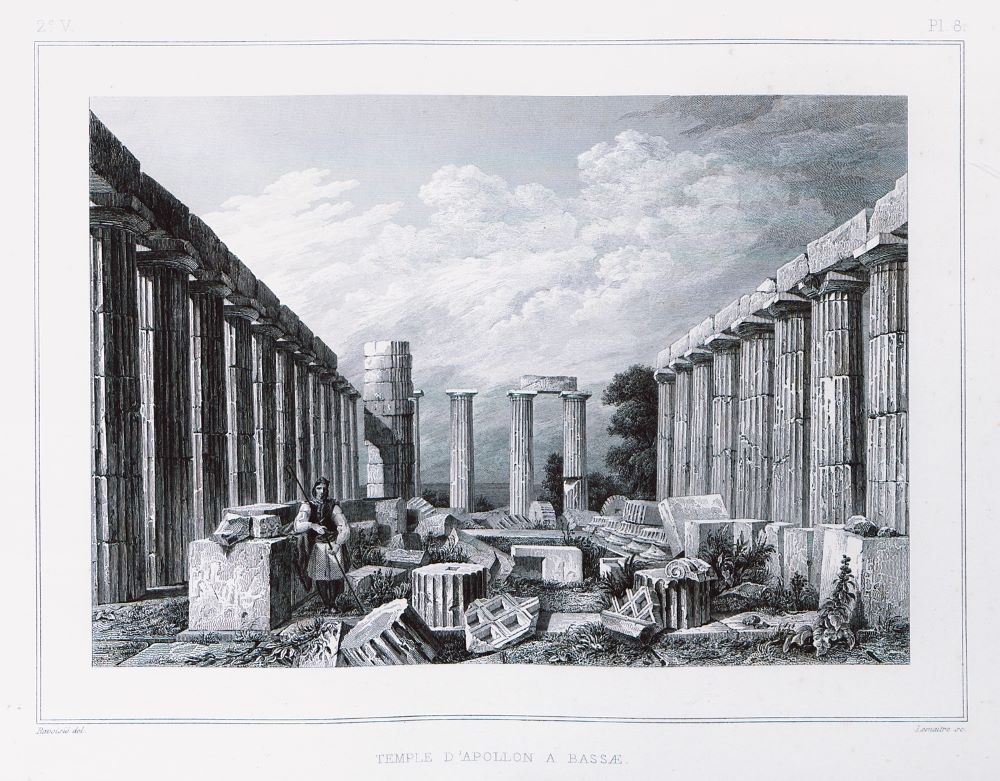
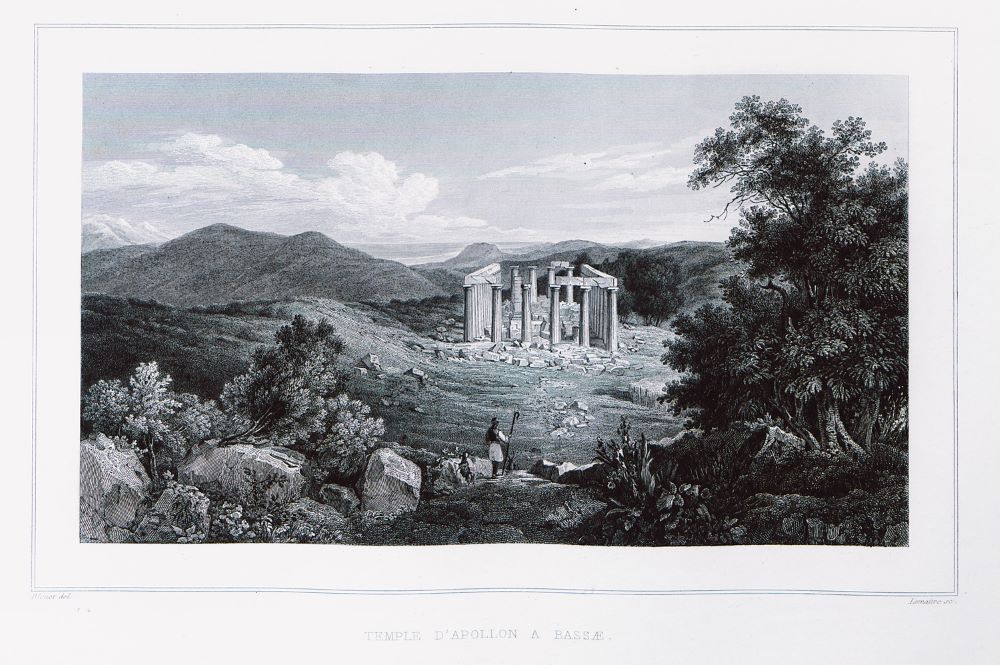
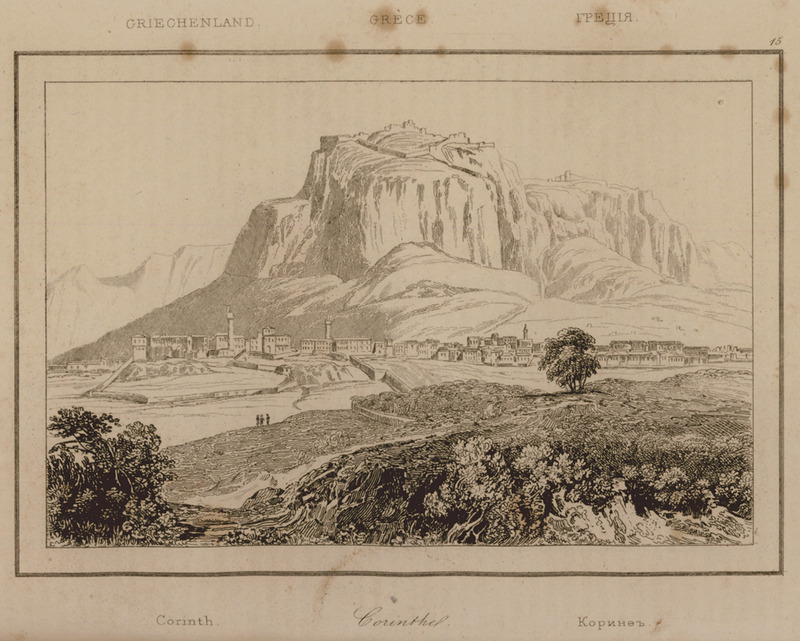
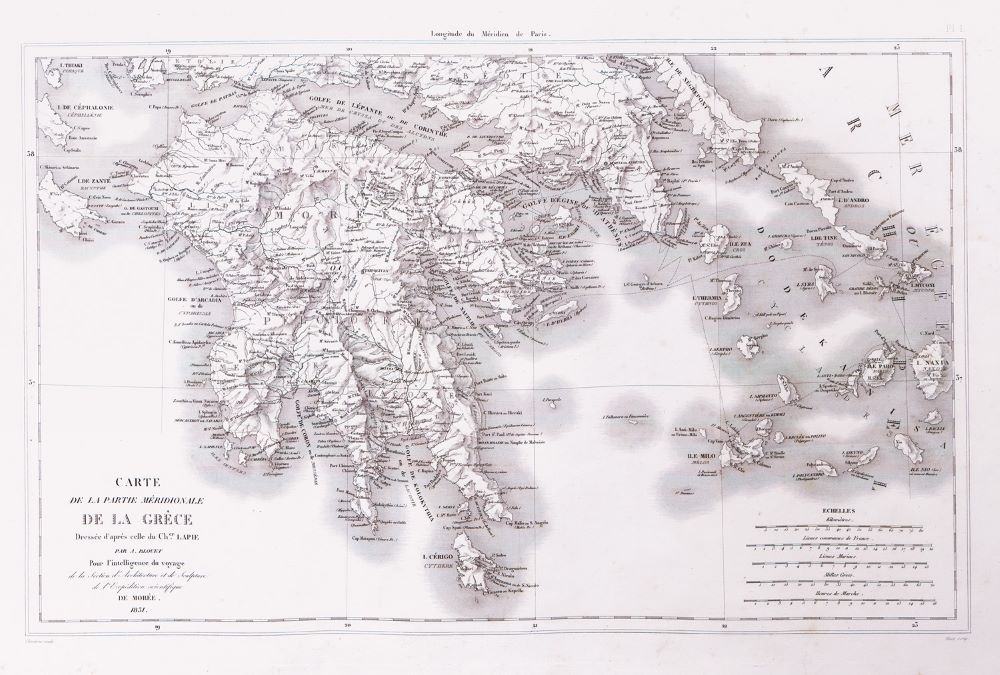
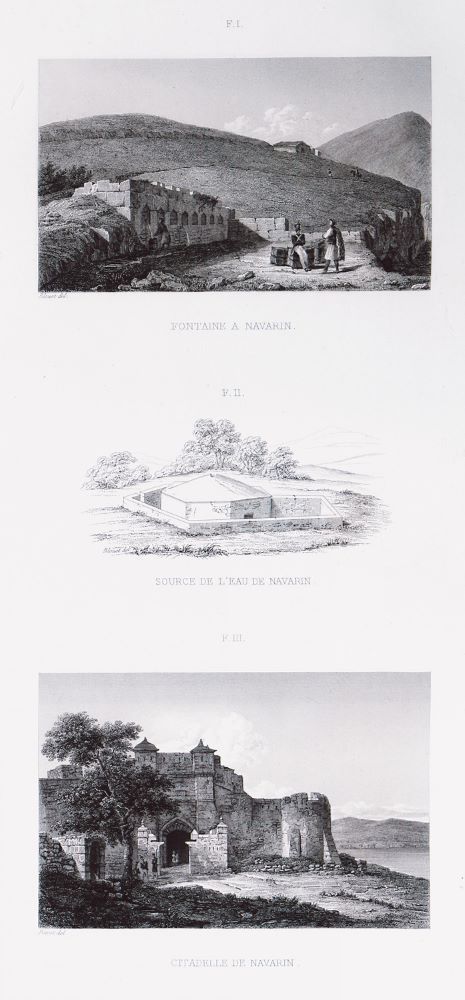
On March 3, 1829, twenty French scientists, geographers, naturalists, architects and Hellenistic scholars, at the request of Governor Capodistrias, landed in Navarino, which had just been liberated by Ibrahim’s troops (1827) and the French military expedition under General Maison (1828), in order to explore Greece. Their aim was, on the one hand, to gain an in-depth understanding of the nature and culture of Greece and, on the other hand, to offer the Greek administration modern management and development tools. French scientists explored mainly the Peloponnese, but also the Cyclades and Attica. They mapped the area and collected data on the demography, natural resources and infrastructure, nature and antiquities of the fledgling Greek state.

The French Scientific Mission of Morea (also referred as “Morea Expedition”) consisted of three Departments of specialists in natural sciences, archaeology and fine arts and a Topographic Company of 25 army engineers. The findings of the work were published in maps and in 8 imposing volumes between 1831 and 1838, which are accompanied by significant pictorial and cartographic documentation.

The significance of the Mission is manifold. It offers a complete and thorough depiction of the Peloponnese and other regions just after the Revolution, which is an example of the scientific methodology of the era and the emergence of new sciences and cutting-edge technologies, which is an example of the scientific methodology of the era and the emergence of new sciences and cutting-edge technologies, such as statistical demography and geodesy, the interpretation of geological formations and the network of water resources, the excavation and topographic documentation of monuments, the inventory of minerals, fauna and flora.

Upon completion of the activities on the 200th anniversary of the Mission, we want to believe that we will have covered all aspects of its scientific work and will have highlighted its current impact and continuity.


CONFERENCE PROGRAMME


09:00 – 10:00
OPENING – GREETING REMARKS
🔹Embassy of France in Greece, French School of Athens, National Hellenic Research Foundation

INTRODUCTION
🔹 The publication “The Work of the French Scientific Mission to Morea 1829-1838, Part A, 2011 and Part B, 2017, published by Melissa House”.
Yannis SAITAS (Architect, Urban Planner, Ethnologist)


10:00 – 11:30FIRST SESSION – THE CARTOGRAPHIC WORK 

Moderator: Matthieu ABGRALL (Associate for scientific and university cooperation, Deputy Director of the French Institute in Greece)

🔹The geodetic works of Moreas (1829-1830) as a foundation for cartography
Pierre BRIOLE, (CNRS Research Director, Ecole Normale Supérieure Paris)

🔹Geographies of the possible: society, environment and national identity in the work of the Morea Scientific Mission (1829)
George TOLIAS (Professor, École Pratique des Hautes Études, Former Director of Research, Institute of Historical Research – National Research Foundation)

🔹Digital reconstruction of the cartographic work of the French Scientific Mission
Eleni GKADOLOU (Digital Asset Manager, British School of Athens, Doctor of Geography, Agronomist and Surveyor Engineer)

🔹The map of the French Scientific Mission as evidence for the study of the settlements and population of the Peloponnese during the period of the Revolution: research results and future prospects
Michalis FESTAS (Postdoctoral researcher at the Institute of Historical Research (IHR) of the National Hellenic Research Foundation (NHRF), member of the Digital Historical Cartography Laboratory of the IHR/NHRF)


12:00 – 13:30SECOND SESSION – LIFE AND EARTH SCIENCES
Moderator: Gilles DE RAPPER (Director of Studies – Department of Modern and Contemporary Studies)

🔹The Botanical Mission to the Peloponnese
Sophia RHIZOPOULOU (Professor Emeritus of Plant Ecophysiology, Department of Biology, Section of Botany, National and Kapodistrian University of Athens, Head of the KEDIVIM “Cultural Botany” programme)

🔹The Morea Scientific Mission: the origins of the geoarchaeological approach
Eric FOUACHE (Professor, Sorbonne Université – UR Médiations)
and Antoine CHABROL (Doctoral Candidate, Sorbonne Université -UR Médiations)

🔹The Morea Mission in the Plantarium of the National Museum of Natural History in Paris
Clémence PAGNOUX (Associate Professor at the National Museum of Natural History, BioArch UMR 7209 MNHN CNRS Inrap, Paris)


15:00 – 17:00THIRD SESSION – HISTORY AND ARCHAEOLOGY
Moderator: Ourania POLYCANDRIOTI (Director of Research, Institute of Historical Research / National Hellenic Research Foundation)

🔹Letters, press, books, for the love of Greece. Ambroise Firmin-Dido and the Scientific Mission of the Morea.
Emmanuelle COLLAS (Historian, Doctor of Philology and Associate Professor of Greek History, publisher)

🔹A different scientific mission of Morea: the “humble” Viety discovers the Peloponnese
Clémence WEBER-PALLEZ (Associate Professor of Greek History, Laboratoire PLH – Université Toulouse 2 Jean Jaurès)

🔹Raybaud’s journalistic adventure in Greece
Vincent TOUZE (Doctor of Political Science, Graduate of Higher Studies in Public Administration)


17:00 – 18:30FOURTH SESSION – FROM PAST TO PRESENT. THE EVOLUTION OF CARTOGRAPHY IN THE 21ST CENTURY
Moderator:  Pinelopi MATSOUKA (Anavasi Publications)

🔹Geoinformatics and applications for the future of cartography
Angelos ADAMAKOPOULOS (Creator IGN RANDO App)

🔹Map reading modeling
Vassilis KRASSANAKIS (Associate Professor, University of West Attica, PhD in Engineering, NTUA, Diploma in Agronomy and Surveying Engineer, NTUA)

🔹Challenges in Future Cartography: Artificial Intelligence and Big Geospatial Data
Christos CHALKIAS (Professor, Harokopio University of Athens)


CATALOGUE OF PARTICIPANTS


Matthieu ABGRALL (Associate for scientific and university cooperation, Deputy Director of the French Institute in Greece)
Angelos ADAMAKOPOULOS  (Creator IGN RANDO App)
Ivi ADAMAKOPOULOU  (Anavasi Publications)
Pierre BRIOLE (CNRS Research Director, Ecole Normale Supérieure Paris)
Antoine CHABROL (Doctoral Candidate, Sorbonne Université -UR Médiations)
Christos CHALKIAS (Professor, Harokopio University of Athens)
Emmanuelle COLLAS (Historian, Doctor of Philology and Associate Professor of Greek History, publisher)
Michalis FESTAS (Postdoctoral researcher at the Institute of Historical Research (IHR) of the National Hellenic Research Foundation (NHRF), member of the Digital Historical Cartography Laboratory of the IHR/NHRF)
Eric FOUACHE (Professor, Sorbonne Université – UR Médiations)
Eleni GKADOLOU (Digital Asset Manager, British School of Athens, Doctor of Geography, Agronomist and Surveyor Engineer)
Vassilis KRASSANAKIS (Associate Professor, University of West Attica, PhD in Engineering, NTUA, Diploma in Agronomy and Surveying Engineer, NTUA)
Pinelopi MATSOUKA (Anavasi Publications)
Clémence PAGNOUX (Associate Professor at the National Museum of Natural History, BioArch UMR 7209 MNHN CNRS Inrap, Paris)
Ourania POLYCANDRIOTI (Director of Research, Institute of Historical Research / National Hellenic Research Foundation)
Gilles DE RAPPER (Director of Studies – Department of Modern and Contemporary Studies)
Sophia RHIZOPOULOU ((Professor Emeritus of Plant Ecophysiology, Department of Biology, Section of Botany, National and Kapodistrian University of Athens, Head of the KEDIVIM “Cultural Botany” programme)
Yannis SAITAS (Architect, Urban Planner, Ethnologist)
George TOLIAS (Professor, École Pratique des Hautes Études, Former Director of Research, Institute of Historical Research – National Research Foundation)
Vincent TOUZE (Doctor of Political Science, Graduate of Higher Studies in Public Administration)
Clémence WEBER-PALLEZ (Associate Professor of Greek History, Laboratoire PLH -Université Toulouse 2 Jean Jaurès)


More information: https://www.ifg.gr/events/imerida-galliki-epistimoniki-apostoli-tou-moria/


© Travelogues – Aikaterini Laskaridis Foundation │ Fondation Aikaterini Laskaridis
 

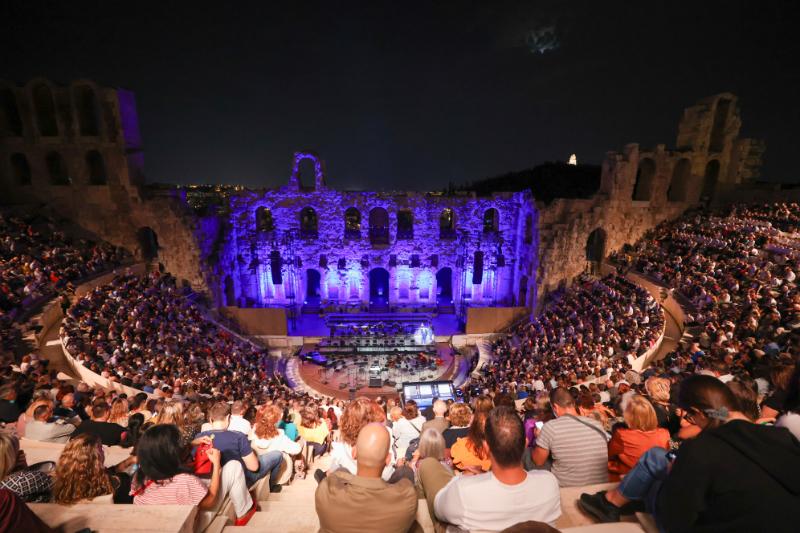
With particular success and great emotion, in a packed Herodeion, on October 10, 2024, the big concert of the Society for Hellenism and Philhellenism (SHP) and the Philhellenism Museum took place, in the presence of the political and military leadership of the country and many diplomats, to celebrate the bicentenary since the death of Lord Byron and the Philhellenes.

The event was prefaced by the president of the SHP, Mr. Konstantinos Velentzas, the Minister of National Defense, Mr. Nikos Dendias, and the British ambassador, Mr. Matthew Lodge.

The concert, the artistic direction of which was assigned to Ms. Lina Nikolakopoulou, began with recitations of poems by Lord Byron and other Greek and Philhellene poets, by herself, the writer and journalist Victoria Hislop, and the professor of poetry at the University of Oxford Alicia E. Stallings.

In the first part, the ERT Contemporary Music Orchestra appeared with chief musician Mr. Giorgos Aravidis who played works by the British Philhellene composer Tom Smail and songs and music by Greek composers, related to the struggle of the Greeks for freedom.

Throughout the concert, SHP displayed the portraits of 80 emblematic Philhellenes, each with the flag of their country, on the wall of Herodeion.

This was followed by the Dryades quartet, with Soprano Katia Paschou and pianist Achilleas Wastor, with philhellenic songs and music that animated the philhellenic movement internationally during the period of the Greek War of Independence.

The concert closed with the Band of the Air Force with chief musician Alexandros Litsardopoulos and the Vrilissia choir with chief musician Giorgos Ziakas, with melodies by the famous Philhellene composer, Gioachino Rossini, and songs from the work Eleftheroi Poliorkmenii by Dionysios Solomos, with music by Yiannis Markopoulos and Christos Leontis, with soprano Sofia Zova.

The SHP honors the great romantic poet and the Philhellenes with the establishment of the Philhellenism Museum, the construction of the Philhellenes Monument on Vasilissis Sofias (in front of the War Museum), which is a decision of the 4th National Assembly in Argos and the institutionalization as early as 2021 in collaboration with the Academy of Athens, of the international Lord Byron prize awarded annually to three international personalities.

The SHP and the Philhellenism Museum have organized around 20 similar events this year, which include school and sports competitions, speeches, conferences (in Athens and Cambridge), exhibitions (at the Hellenic Parliament, the Academy of Athens, the War Museum), concerts, publications, etc. in Greece, the United Kingdom, Switzerland, Germany, etc.

Lord Byron’s contribution to the liberation of Greece

Lord Byron’s contribution to the liberation of Greece was crucial. His name, undoubtedly, is synonymous with Philhellenism internationally for three reasons.

First, with his emblematic work Childe Harold’s Pilgrimage, he highlighted Greece as the cradle of Western civilization, familiarized international opinion with this concept-belief and progressively led to the adoption of the demand that “Greece might still be free again!”.

Secondly, from the works of this most famous man in the world, a new romantic hero emerged, the Palikari punisher of brutality (like the Giaour). The particularly popular world-wide Byronic heroes dominated the philological salons, were adored by the public, were depicted in all forms of art, and once the Greek Revolution began, they were identified with Greek fighters, offering impetus to the development of the Philhellenic movement in Europe.

In 1823, the cause of the freedom of Greece was the last noble mission adopted by the great poet and it is on this altar that he sacrificed his life. This was his third and most important contribution to Greece, triggering an activism of unprecedented intensity and effectiveness, the constant sending of financial aid and volunteers, and a series of diplomatic and political actions which culminated in the Battle of Navarino and led, ultimately, to in the establishment of the new independent Greek state. Thus, Lord Byron justly entered the Pantheon of Greek heroes.

For information: Info@eefshp.org, 210.8094750


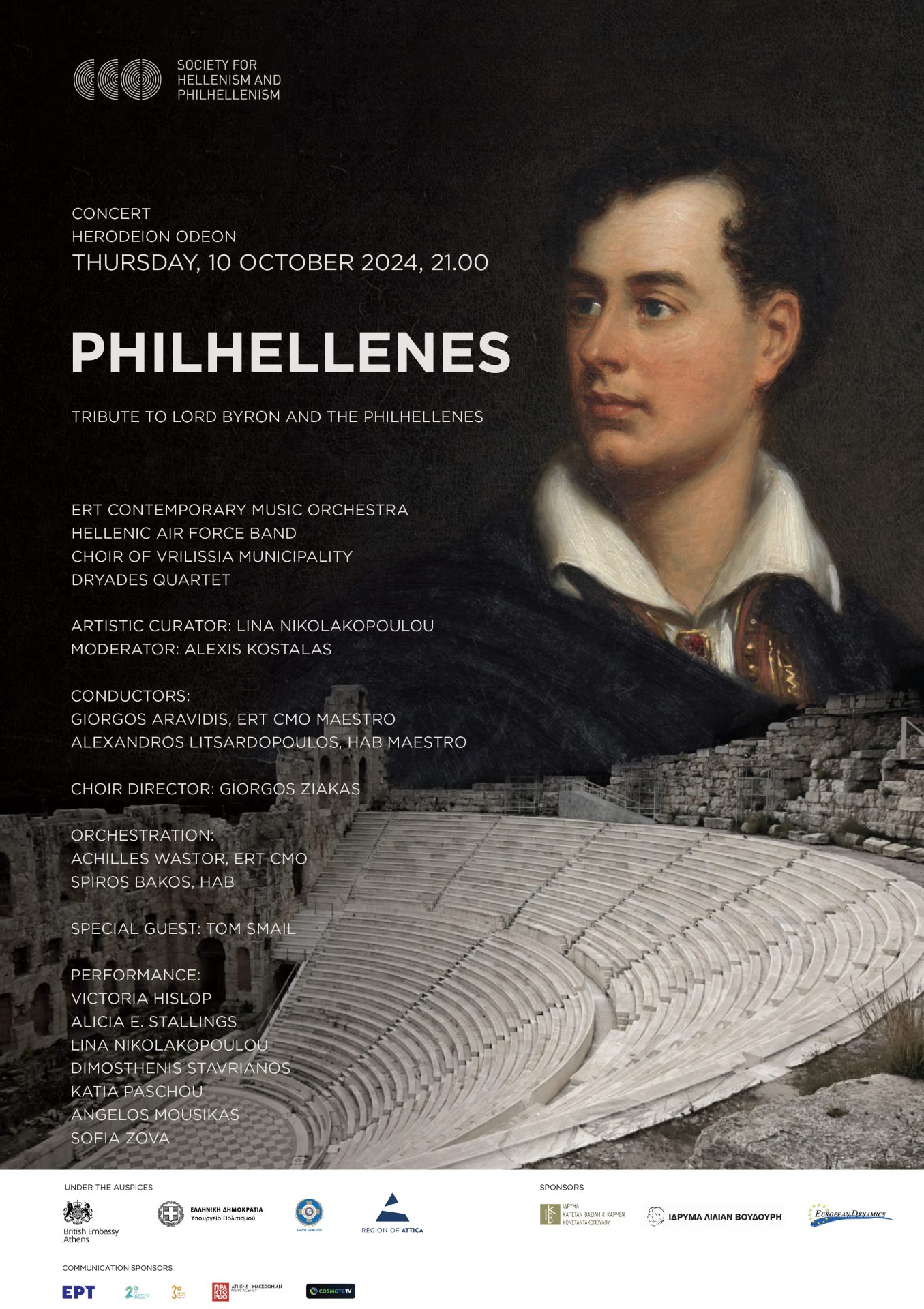
PHILHELLENES

Tribute to Lord Byron and the Philhellenes

Distinguished artists honour the “Year of Lord Byron and Philhellenism”, through works of great Greek and Philhellenes poets.

Under the Sacred Rock of the Acropolis, after 200 years, Greeks and Philhellenes are united again in body, with one heart, and all together sing for Freedom and Peace!

ERT CONTEMPORARY MUSIC ORCHESTRA (ERT CMO)
HELLENIC AIRFORCE BAND (HAB)
CHOIR OF VRILISSIA MUNICIPALITY
DRYADES QUARTET

ARTISTIC CURATOR: LINA NIKOLAKOPOULOU

MODERATOR: ALEXIS KOSTALAS

SPECIAL GUEST: TOM SMAIL

CONDUCTORS:
GIORGOS ARAVIDIS, ERT CMO MAESTRO
ALEXANDROS LITSARDOPOULOS, HAB MAESTRO

CHOIR DIRECTOR: GIORGOS ZIAKAS

ORCHESTRATATION:
ACHILLES WASTOR, ERT CMO
SPIROS BAKOS, HAB

PERFORMANCE:
VICTORIA HISLOP
ALICIA E. STALLINGS
LINA NIKOLAKOPOULOU
DIMOSTHENIS STAVRIANOS
KATIA PASCHOU
ANGELOS MOUSIKAS
SOFIA ZOVA

LIGHTNING DESIGN: DIMITRIS KOUTAS

Organised by:
SHP, Philhellenism Museum

Free entry by invitation
For reservations: info@eefshp.org
Note: Please enter a different name, email and mobile phone per invitation. The ticket with the Bar Code will be sent to each mobile phone you will register. For information you will receive messages to the email you have declared.

Under the auspices of:
British Embassy
Ministry of Culture
Municipality of Athens
Region of Attica

Sponsors:
Captain Vassilis & Carmen Konstantakopoulos Foundation
Lilian Voudouris Foundation
EUROPEAN DYNAMICS


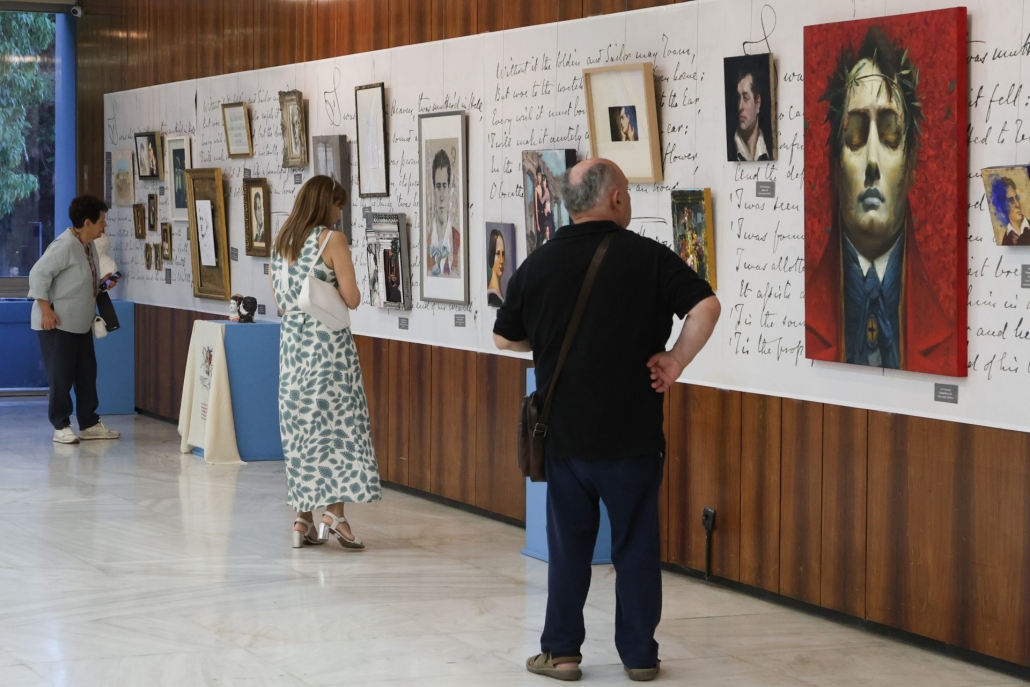
The Philhellenism Museum and the War Museum, in the context of the year “2024, Year of Lord Byron and Philhellenism”, inaugurated the group exhibition “… Where the arts of war and peace grew…”, with the participation of 50 distinguished Greek artists.

The exhibition is presented in the foyer of the Amphitheater of the War Museum.

A handwritten poem by Lord Byron from the archive of the Society for Hellenism and Philhellenism (SHP), became the conceptual and material body in which 50 works were deployed and narrate in modern terms the main milestones in the life and work of Lord Byron.

During the opening, the President of the War Museum, Lieutenant General Mr. Konstantinos Karamesinis, welcomed the guests and spoke about the collaboration with the Philhellenism Museum, thanking the contributors for the unique way in which the space was shaped into a new museum destination.

The founder and president of the SHP and the Philhellenism Museum in Athens, Mr. Constantinos Velentzas, referred to Lord Byron as the most famous man of his time, who was a role model for the most important artists and intellectuals. Every soul that felt suffocated in the societies of the early 19th century, wanted to be like him. For 2024, the Philhellenism Museum has presented two more major exhibitions dedicated to Lord Byron and the Byronic art on which Philhellenism was based. One is hosted at the Hellenic Parliament and the second at the Academy of Athens. All exhibitions are open to the public with free admission.

The activities of the SHP and the Philhellenism Museum in 2024 will be completed with two conferences in November 2024 (at the Museum of Cycladic Art and at the University of Cambridge), and with a big concert to take place in the Herodeion oden, on October 10, 2024, with selected artists, the orchestra and the choir of ERT.

As the exhibition is under the auspices of the British Embassy, ​​representing the British Ambassador in Athens, Ms. Katharina Arnold spoke about the intense activity of the SHP and the Philhellenism Museum regarding Lord Byron and Philhellenism.

The Philhellenism Museum houses and exhibits the largest private collection of Lord Byron’s personal effects and Byronic art, as well as 5,000 valuable historical relics and evidence related to Philhellenism.

The curator of the exhibition, Mrs. Iris Kritikou, spoke about the bold project to present a tribute of contemporary art to Lord Byron and the way in which fifty distinguished Greek artists proceeded to create an independent organic art area around and within visual, plastic, and symbolic references to the great romantic poet and Philhellene.


The exhibition is under the auspices of the British Embassy.


Participating artists:

Yannis Adamakis, Aggeliki Antonea, Lydia Venieri, Marilitsa Vlahaki, Marina Vlachaki, Andreas Georgiadis, Markos Georgilakis, Maria Giannakaki, Stratigoula Giannikopoulou, Fanis Goulis, Maria, Diakodimitriou, Frangiskos Doukakis, Argyro Driva, Stamatis Zannos, Nikos Zivas, Gogo Ieromonachou, Apostolis Itskoudis, Polina Kasimati, Andreas Kontellis, Themis Kontogouris, Filippos Koutrikas , Nikos Leontopoulos, Vassilis Liaouris, Minas Mavrikakis, Manos Batzolis, Ismini Bonatsou, Rouli Mpoua, Yiannis Brouzos, Andreas Nikolaou, Mary Ntagianta, Thodoros Papagiannis, Christos Papadakis, Dimitris Papanikolaou, Kostas Papatriandafyllopoulos, Nikos-Giorgos Papoutsidis, Nikos Perantinos, Stelios Petroulakis, Michalis Sakalis, Giorgos Saltaferos, Ifigenia Sdoukou, Stefanos Souvatzoglou, Vasilis Soulis, Kostas Spiriounis, Marina Stellatou, Praxitelis Tzanoulinos, Nikos Triantafyllou, Claire Tsalouchidi-Chatzimina, Dimos Flessas, Manolis Charos.

A bilingual catalogue will be published as part of the exhibition, and parallel actions are planned.

“… Where the arts of war and peace grew…”

Curator: Iris Kritikou, archaeologist and art historian.

Venue: War Museum, Amphitheater Foyer, Rizari 2, 10675 Athens
Duration: July 9, 2024 – September 9, 2024
Days and hours of operation: Daily, 9.00 – 19.00
Free entrance

Information:
Museum of Philhellenism | Email: info@phmus.org | T. +30 210 8094750
War Museum | E.: info@warmuseum.gr | T. +30 210 7252974


Media sponsor:

With the kind sponsorship of the Society for Hellenism and Philhellenism and the international group EUROPEAN DYNAMICS.


The Philhellenism Museum and the War Museum, within the context of the year “2024, Year of Lord Byron and Philhellenism”, are co-organizing an important group exhibition, with the participation of 50 Greek visual artists, entitled: “…Where grew the arts of war and peace…”.

This year’s bicentenary of the death of Lord Byron is a point of reference for 50 distinguished Greek artists, who honour the great romantic poet and Philhellene with their artworks.

The historic foyer of the War Museum’s Amphitheatre will host for the coming months, a multi-layered visual tribute to Lord Byron that encourages us to discover his worldwide glory in relation to his passionate love for Greece and Freedom.

Curated by: Iris Kritikou

Participating artists:

Yannis Adamakis, Aggeliki Antonea, Lydia Venieri, Marilitsa Vlahaki, Marina Vlachaki, Andreas Georgiadis, Markos Georgilakis, Maria Giannakaki, Stratigoula Giannikopoulou, Fanis Goulis, Maria, Diakodimitriou, Frangiskos Doukakis, Argyro Driva, Stamatis Zannos, Nikos Zivas, Gogo Ieromonachou, Apostolis Itskoudis, Polina Kasimati, Andreas Kontellis, Themis Kontogouris, Filippos Koutrikas , Nikos Leontopoulos, Vassilis Liaouris, Minas Mavrikakis, Manos Batzolis, Ismini Bonatsou, Rouli Mpoua, Yiannis Brouzos, Andreas Nikolaou, Mary Ntagianta, Thodoros Papagiannis, Christos Papadakis, Dimitris Papanikolaou, Kostas Papatriandafyllopoulos, Nikos-Giorgos Papoutsidis, Nikos Perantinos, Stelios Petroulakis, Michalis Sakalis, Giorgos Saltaferos, Ifigenia Sdoukou, Stefanos Souvatzoglou, Vasilis Soulis, Kostas Spiriounis, Marina Stellatou, Praxitelis Tzanoulinos, Nikos Triantafyllou, Claire Tsalouchidi-Chatzimina, Dimos Flessas, Manolis Charos.

As part of the exhibition, a bilingual catalogue will be published and parallel activities are planned: educational programmes, lectures, musical tributes, theatrical recitals, etc.

The exhibition is curated by: Archaeologist and Art Historian, Iris Kritikou.

The exhibition is under the auspices of the British Embassy.
With the kind sponsorship of the Society for Hellenism and Philhellenism and the international group EUROPEAN DYNAMICS.

Exhibition venue: War Museum, War Museum’s Amphitheatre Foyer, Rizari 2, 10675 Athens
Exhibition duration: July 9, 2024 – September 9, 2024
Opening hours: Daily, 9.00 – 19.00
Free admission

Information:
Philhellenism Museum
info@phmus.org, T. +30.210.8094750

War Museum
info@warmuseum.gr, T. 2107252974


The Hellenic Parliament in collaboration with the SHP and the Philhellenism Museum organized a particularly successful exhibition on the occasion of the 200th anniversary of the death of the great romantic poet and emblematic Philhellene, Lord Byron.

The exhibition entitled Beholding Liberty with Lord Byron’ s gaze, presents rare personal objects of Lord Byron and remarkable Byronic artworks from the collection of the Philhellenism Museum.

As a still living organism, the exhibits invite the visitor to navigate a unique route where the narration of Lord Byron’ s life and work allow the deepest comprehension of his contribution to the liberation of Greece, as well as the reason why he has been recorded in the international collective memory as the most glorious Philhellene of all times.

The exhibition is curated by the art historian Dr. Thodoris Koutsoyiannis.


Information:

Ε. info@phmus.org | Τ. +30 2108094750


The Greek Consul in Geneva, Mr. Alexandros Gennimatas, organized a particularly important ceremony during which an iconic bust of Lord Byron was inaugurated in Geneva, at the famous Villa Diodati in the municipality of Cologny. The bust is offered on behalf of the Hellenic community in Geneva, as a symbol of gratitude to the great British Philhellene, Lord Byron. The ceremony took place on Wednesday, 15 May 2024.

This historic villa on the lake of Geneva, where Lord Byron lived in the summer of 1816 with his friends Mary and Percy Shelley, John Polidori and Claire Clermont, has been linked with the two famous horror stories of international literature, “Frankenstein” and “Vampire”. Byron’s cohabitation with the Shelleys during the “year without a summer” as 1816 went down in history due to a huge climate crisis caused by a volcano eruption in Asia, had a significant impact on the development of international literature and the subsequent development of Philhellenism internationally .

The extremely important and complex task of highlighting this unique landmark in Geneva, which honors Lord Byron and Philhellenism, “will be another point of reference in the long philhellenic tradition of Geneva”, as mentioned by Mr. Alexandros Gennimatas.

The construction and installation of the bronze bust of Lord Byron was sponsored by the Greek businessman Mr. Georgios Koukis, while the artwork was designed by the Greek sculptor and professor, Mr. Praxitelis Tzanoulinos. This project started in 2020, on the initiative of the Consul of Greece and the honorary president of the Greek Community of Geneva.

The Society for Hellenism and Philhellenism (SHP) and the Philhellenism Museum participated in the inauguration ceremony and the event that followed, with a speech by the President of the SHP and the Philhellenism Museum, Mr. Constantinos Velentzas. In the context of this event, Mr. Velentzas honored the important Swiss Professor of archeology and history, Mr. Pierre Ducrey, with the Lord Byron Medal on behalf of the SHP and the Academy of Athens.

This distinction recognizes Professor Ducrey’s contribution to highlighting the values of Hellenism, Greek history, and culture, as well as his contribution to strengthening the historical ties between Greece and Switzerland.

The ceremony was attended by HE Metropolitan Maximos of Switzerland, the mayor of Cologny Ms. Catherine Pahnke, the next mayor of Geneva Ms. Christina Kitsos, the deputy mayor of Cologny Mr. Pascal Hornung, the permanent representative of the United Kingdom to the UN in Geneva Ambassador Simon Manley, the honorary president of the Greek Community of Geneva, Mr. Michalis Papadopoulos, the family of Mr. Georgiou Koukis, and many representatives of Greek and philhellenic organizations.


Pierre Ducrey, a contemporary defender of Philhellenism

Pierre Ducrey embodies what he describes as “new philhellenism”, a modern form of the solidarity movement for Greece, born in Europe during the Greek War of Independence (1821-1827). Archaeologist, historian of ancient and modern Greece. He has taken part in excavations in Northern Greece in Philippi and in Crete, as a researcher of the French Archaeological School. He then directed the Swiss Archaeological School in Greece (ESAG) and the Swiss excavations of Eretria in Evia for 24 years. He served as professor of ancient history at the University of Lausanne from 1974 to 2005, and was rector of that university from 1987 to 1995. From 2005 to 2010 he was president of the Hardt Foundation for the Study of Classical Antiquity, located at Vandoeuvres in Geneva, then he directed the Foundation until 2022 under the presidency of the former president of the Swiss Confederation, Mr. Pascal Couchepin.


Society for Hellenism and Philhellenism (SHP)

The SHP awards the Lord Byron Medal every year in collaboration with the Academy of Athens, to private or public organizations, to academics and researchers who have contributed to the promotion of Hellenic  culture, to personalities or to organizations that support the mission of the SHP, and finally to descendants of Philhellenes who offered their support to Greece during the war of independence.


Information:
Philhellenism Museum, T. +302108094750, E. info@phmus.org
Links: https://phmus.org


Sponsor:

Media Sponsor:


The educational community participates actively in this celebrations of the SHP – Philhellenism Museum for the 200th anniversary since Lord Byron’s death.

Further to the initiative of the Second Arsakeion Lyceum of Psychiko, the Arsakeia Schools of Psychiko collaborated with the Philhellenism Museum to organize a special event – tribute to Lord Byron in the historic School Library with reference to the museum’s unique exhibits.

The event involved a live discussion between the distinguished Professor of Archaeology, Vassilis Lambrinoudakis, and the president of the Philhellenism Museum, Konstantinos Velentzas. The Director of the Second Arsakeio Lyceum, Linguist Nelli Pappa, took over the coordination of the debate, which had as its axis two different approaches aimed at the promotion internationally of Greek culture. The participating students had distinguished themselves in the preparatory stage that preceded the event.

The collaboration will continue with the use of the produced audio-visual material and with the implementation of new actions that the students will undertake to prepare this time by themselves.

Information:
Philhellenism Museum, T. 2108094750, E. info@phmus.org


Links:
www.phmus.org
www.eefshp.org
www.facebook.com/PhilhellenismMuseum


Media sponsor:


The Ministry of Defense (MoD) organized on 24/4/2024 at the Evelpidon Military Academy, a ceremony for the leadership of the Hellenic Armed Forces to honour Philhellenism and the 200 years since the death of Lord Byron. An English poet whose name was associated with Messolonghi and the Struggle for Greek Independence. His role, like that of all the Philhellenes, was absolutely pivotal for the people and governments of Europe to support the Greek Revolution.

The event was attended by the Minister of National Defense, Mr. Nikos Dendias, the leaders of GEETHA, GES, GEN, GEA and Ms. Susan Geary on behalf of the British Embassy in Athens. The Minister addressed the cadets in the main auditorium of the Academy. A speech followed on the contribution of Lord Byron and the Philhellenes volunteers to the establishment of the Greek Regular Army, by the president of the SHP and Philhellenism Museum, Mr. Konstantinos Velentzas.


Information:
Philhellenism Museum, T. 2108094750, E. info@phmus.org


Links:
www.phmus.org
www.eefshp.org
www.facebook.com/PhilhellenismMuseum


Media sponsor:


The event took place on 25/4/2024 at the emblematic Iliou Melathron building on Panepistimiou Street, in collaboration with the British Embassy, in the presence of the British Ambassador in Athens, Matthew Lodge.

The event was attended by Byron College – The International British School and the distinguished British musician Tim Healy, who visited Greece for two days and captivated the attendees to the musical background of the bagpipe.

Speeches were given by the Director of the Numismatic Museum, Anastasia Rammou, the President of the SHP – Philhellenism Museum, Konstantinos Velentzas, the British Ambassador to Greece, Matthew Lodge, the head of studies at Byron College, Rory Gallagher and the Mayor of Vyronas Municipality, Alexios Sotiropoulos.

A large number of friends responded to the invitation, including academicians, professors, diplomats, politicians, representatives of the Armed Forces and the government.

The event comprised readings of Lord Byron’s poems and musical performances accompanied by violin and cello. This special evening ended with a reception.


For information:
Philhellenism Museum, Τ. 2108094750, Ε. Ε. info@phmus.org


Links:
www.phmus.org
www.eefshp.org
www.facebook.com/PhilhellenismMuseum


Media sponsor::